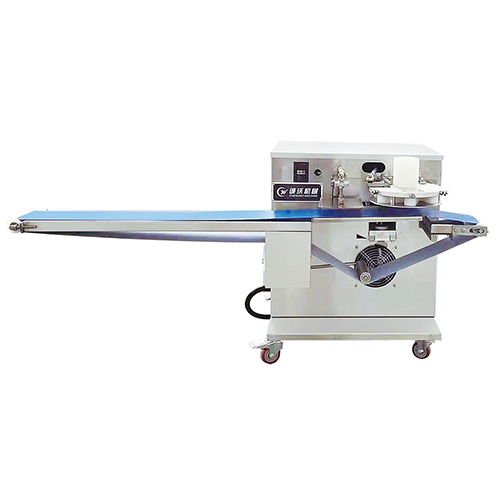

An industrial bread production line represents a modern approach to large-scale baking, integrating filling, rolling, cutting, forming, and final shaping into one streamlined workflow. This article explores its major components, core concepts, comparison points, and practical FAQs to help readers understand how these systems enhance quality and consistency.
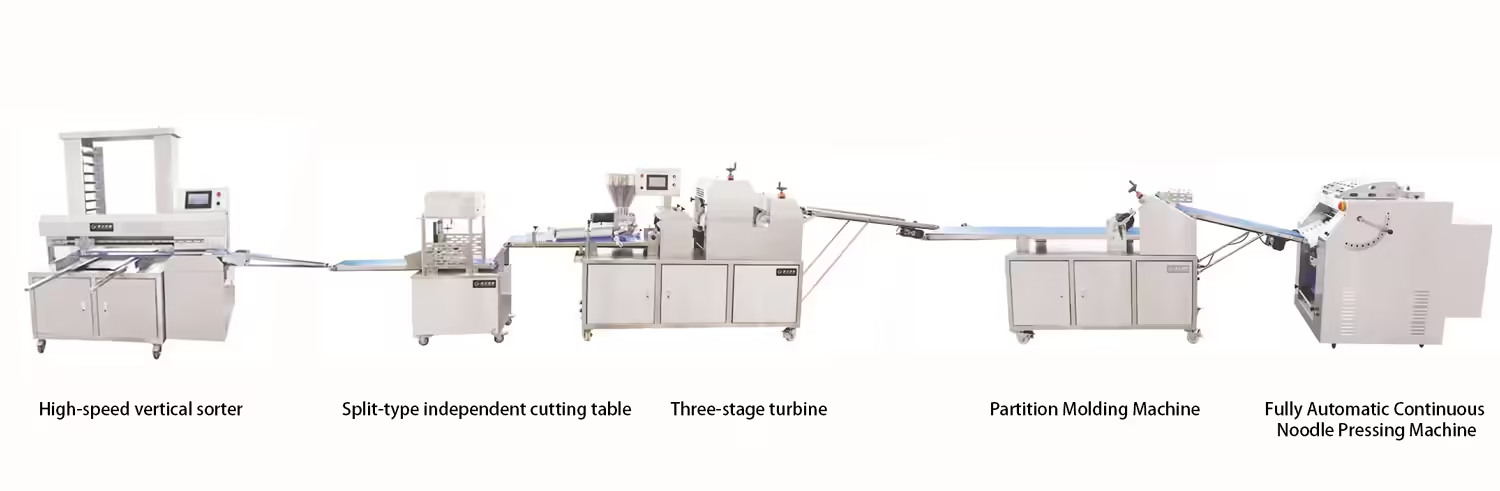
An industrial bread production line functions through synchronized mechanical actions across multiple stages of dough handling. Each module communicates with the next, ensuring stable dough flow, repeatable shaping, and uniform product size. This coordination reduces errors and improves batch quality.
Instead of creating dough in isolated steps, the line maintains a continuous process. This lowers manual workload, minimizes temperature fluctuations, and helps the dough maintain strong gluten structure.
These production lines are modular, allowing factories to adjust capacity, production speed, or bread types. Companies can upgrade specific sections without rebuilding the entire system.
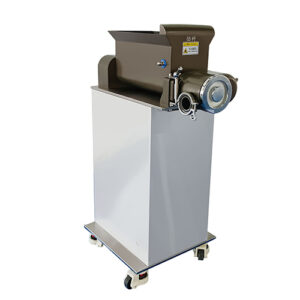
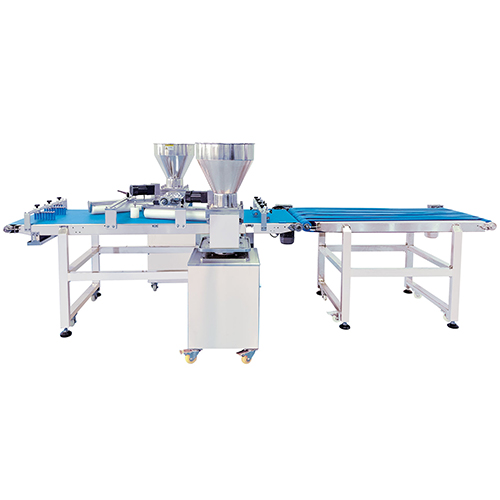
The filling machine ensures consistent injection of creams, jams, pastes, or other fillings into dough portions. A pick type filling machine provides precise placement, while a vertical filling machine delivers strong downward flow suitable for high-viscosity materials.
Pick type mechanisms work well with delicate doughs requiring gentle handling.
Vertical systems are ideal for thicker fillings that rely on gravity-assisted flow.
Choosing the right model depends on filling viscosity and production output expectations.
The rolling platform is a crucial component in an industrial bread production line, responsible for flattening and stretching dough into uniform sheets. It ensures each dough piece has consistent texture and thickness, forming a reliable base for cutting, filling, and shaping in later production stages.
Maintaining uniform pressure across the rolling platform prevents air pockets and uneven dough density. This consistency improves dough elasticity, resulting in smoother, more precise forming, better filling distribution, and a lower rate of defects in the final bread products.
The rolling platform offers adjustable thickness settings, allowing manufacturers to produce a wide variety of bread types. From thin sheets for delicate pastries to thicker layers for stuffed buns, this flexibility ensures that product specifications and quality standards are consistently met.
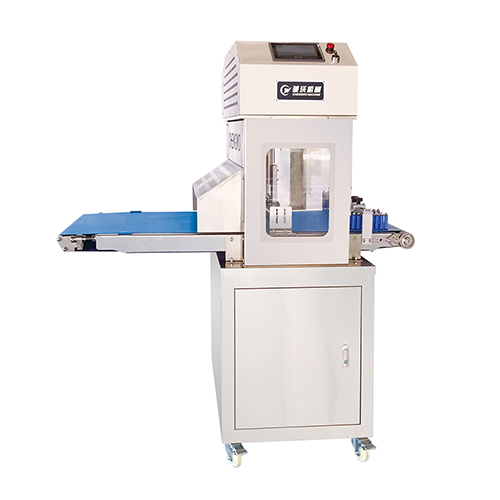
The cut table divides dough sheets into equal portions. This stage ensures accurate weight, shape, and structure before final forming.
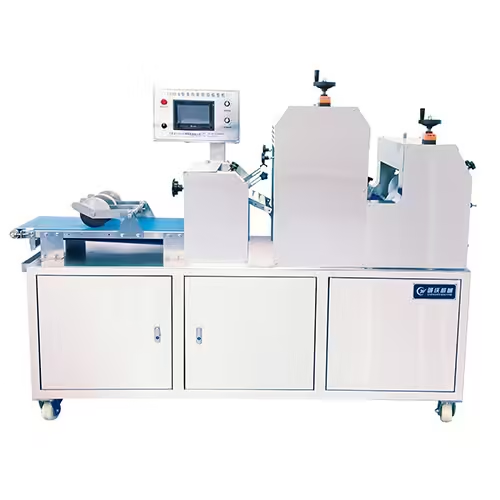
The bread host serves as the central command unit of the industrial bread production line. It monitors and controls the operation of all connected machines, ensuring precise timing, optimal speed, and seamless coordination. This central management reduces errors and improves overall production efficiency.
Centralized logic control allows the bread host to synchronize each module effectively, ensuring smooth transitions between stages. By coordinating machine actions, it prevents bottlenecks, overflows, and mechanical conflicts, maintaining workflow integrity and minimizing waste during production.
With centralized control, the bread host significantly enhances production stability. It maintains consistent operation under varying workloads, reduces unexpected downtime, and ensures continuous, reliable output. This results in uniform bread quality and improved operational efficiency across large-scale production.
The bread forming machine molds dough into standard or customized shapes. Proper shaping influences both product appearance and texture.
Excessive pressure can damage gluten strength.
Insufficient pressure leads to loose and irregular shaping.
Balanced forming pressure ensures ideal final texture.
| Feature / Metric | Manual Production | Industrial Bread Production Line |
|---|---|---|
| Output per Hour | 80–150 pieces | 2,000–10,000 pieces |
| Staffing Needs | 6–12 workers | 1–3 operators |
| Product Consistency | Medium variation | High uniformity |
| Filling Accuracy | ±10–20 g | ±2–5 g |
| Downtime Risk | Higher | Lower with coordinated systems |
This comparison shows how industrial production significantly enhances efficiency, accuracy, and long-term stability.
Lines built with easy-clean structures reduce contamination risk and cut cleaning time. Smooth surfaces and tool-free disassembly enhance overall hygiene.
Modern systems use intelligent sensors and motors that optimize power usage and reduce unnecessary energy consumption during low-load operation.
Factories can start with a compact or mid-size line and add more modules as their production needs grow.mand increases.
An industrial bread production line delivers major advantages in speed, efficiency, hygiene, and long-term operational stability. Understanding each machine—from filling equipment to forming modules—helps bakeries design a system that matches their product range and production goals. With ongoing improvements in automation, these systems continue offering reliable and powerful solutions for modern bread manufacturing.
For personalized advice and professional solutions, contact Chengwo Food Machinery today to explore industrial bread production line and enhance your bakery’s efficiency and product consistency.
An industrial bread production line is a fully automated system that handles dough mixing, filling, rolling, cutting, forming, and baking on a large scale. It improves efficiency, consistency, and hygiene compared to manual production.
Most lines support multiple shapes and fillings by changing forming molds or adjusting rolling settings. Versatility depends on the system’s modular structure.
No. Automation usually improves quality because it minimizes human handling and keeps dough conditions more stable throughout production.
Routine lubrication, belt checks, and sensor calibration are essential. Many systems provide automated alerts for wear or malfunction.
Yes. Modular systems allow small bakeries to scale gradually without heavy initial investment.