

Welcome to My Blog!
Before we dive into the content, if you’re interested in our products or have any questions, please feel free to visit our Contact Us page on the website. Our team is ready to assist you with inquiries, orders, or any support you may need.
Now, let’s get started on our journey together. I hope you find the content here insightful, engaging, and valuable.
Selecting the right restaurant mixer can dramatically improve kitchen productivity, reduce labor pressure, and ensure consistent food quality. Whether you operate a bakery, café, or full-service restaurant, understanding how mixers differ and what factors matter will help you make the best investment for long-term performance.
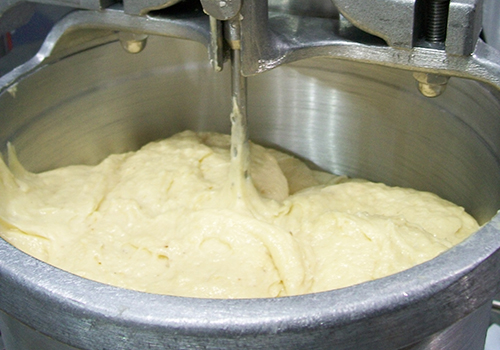
A reliable restaurant mixer supports everything from dough preparation to batter mixing, whipping, and even specialty recipes. In many commercial kitchens, mixing tasks account for a surprising amount of daily prep time. According to data from multiple professional kitchen workflow studies, automating repetitive mixing tasks can cut manual labor time by 30–50%. That efficiency increase directly impacts throughput and service speed.
Different kitchens require different sizes of mixers. Here’s a simple comparison to help you choose the right mixer for your menu and production scale.
| Model | Capacity | Dimension | Voltage | Power | Speed (r/min) |
|---|---|---|---|---|---|
| LJ-25 | 25 kg/80 L | 960 × 650 × 1250 mm | 3-phase, 380V | 5 kW | 120/240 |
| LJ-50 | 50 kg/130 L | 1140 × 720 × 1460 mm | 3-phase, 380V | 7 kW | 120/240 |
| LJ-75 | 75 kg/200 L | 1400 × 750 × 1600 mm | 3-phase, 380V | 10 KW | 130/260 |
| LJ-100 | 100 kg/260 L | 1500 × 900 × 1620 mm | 3-phase, 380V | 11 kW | 130/260 |
| LJ-125 | 125 kg/320 L | 1520 × 940 × 1600 mm | 3-phase, 380V | 13.5 kW | 130/260 |
| LJ-150 | 150 kg/380 L | 1640 × 1080 × 1550 mm | 3-phase, 380V | 15.5 kW | 130/260 |
Understanding these categories helps you avoid under- or over-specifying your machine.
When comparing restaurant mixers, these factors often determine performance and reliability:
Features directly influence the machine’s lifetime cost and output consistency.
Picking the right bowl capacity is crucial for production planning. If your kitchen routinely handles large dough batches or heavy mixtures, you need a machine with both volume and torque. Based on typical restaurant feedback, choosing a mixer with at least 20–30% more capacity than your current need helps support peak hours and menu expansion.
A high-quality restaurant mixer improves efficiency, but it must also meet safety expectations. Look for safety guards, automatic shut-off features, slip-resistant footing, and simple control panels. Clear visibility and ergonomic placement also reduce operator fatigue.
Daily and routine maintenance keeps your equipment performing at its best:
Consistent care ensures stable mixing quality and minimizes unexpected downtime.
Restaurant mixers are built for long-term use, but occasional issues may arise:
Timely troubleshooting prevents small issues from developing into failures.
To make the best decision, evaluate the following:
A well-chosen restaurant mixer enhances reliability, reduces labor stress, and strengthens overall kitchen efficiency.
What size restaurant mixer do I need for my kitchen?
The size depends on your daily dough or batter volume. Small restaurants often use 10–20 qt mixers, while higher-volume kitchens may require 30–60 qt models. Always choose a capacity slightly above your current needs to avoid overloading the machine.
What is the difference between a planetary mixer and a spiral mixer?
A planetary mixer has a stationary bowl with a rotating tool, making it ideal for sauces, creams, pastries, and general prep. A spiral mixer rotates both the bowl and the spiral hook, offering superior gluten development and is preferred for large quantities of dough.
How often should a restaurant mixer be maintained?
Routine cleaning should be done after every use, while lubrication, belt checks, and gear inspections are generally recommended every 2–3 months depending on workload. Following the manufacturer’s maintenance schedule ensures longer service life.
