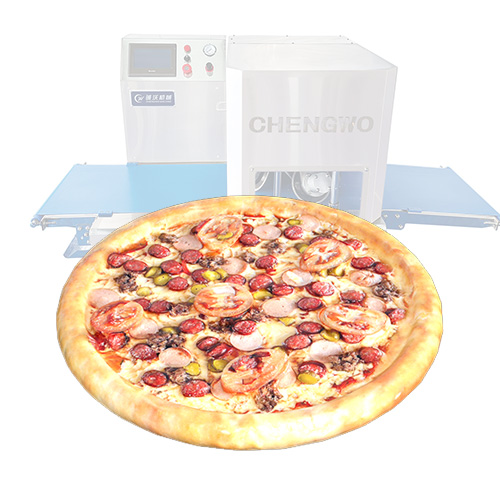

A pizza dough press is a practical piece of equipment used in commercial kitchens to improve consistency, efficiency, and production speed. For pizzerias, restaurants, and food service operations, using a dedicated dough pressing solution helps standardize pizza bases while reducing manual labor.
As a professional manufacturer of commercial dough press machines, we created this guide to help buyers understand how these machines work, how to select the right model, and why sourcing directly from a factory can bring long-term value.

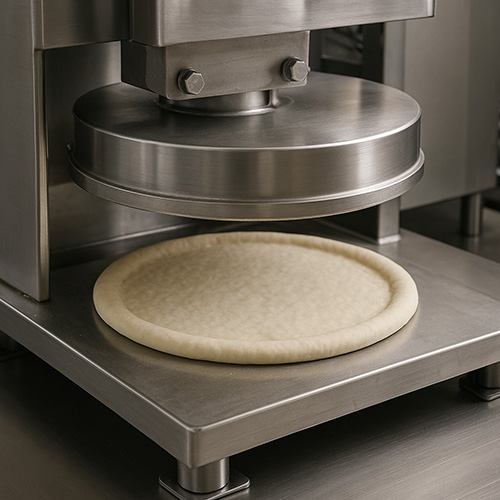
A pizza dough press is designed to flatten dough balls into evenly shaped pizza bases with consistent thickness. Instead of hand stretching or rolling, the machine applies controlled pressure through pressing plates to form the dough quickly and evenly.
The process typically involves placing prepared dough between two plates. Manual or electric pressure is applied until the desired diameter is reached. This method reduces variability in size and thickness, which is essential for professional kitchens aiming for consistent baking results.
Compared to traditional hand methods, dough pressing equipment improves speed and minimizes reliance on highly skilled labor.
Many commercial kitchens adopt dough pressing machines to improve daily operations. The main benefits include:
For businesses producing large volumes of pizza, consistent dough preparation directly impacts product quality and customer satisfaction.
There are several types of dough press machines available, each suited to different production needs.
Manual models are commonly used in small restaurants with moderate output. Electric versions offer higher efficiency and are ideal for busy pizzerias. Heated presses help improve dough elasticity and reduce shrinkage, while cold presses are preferred for specific dough formulations.
For large-scale food service operations, hydraulic or automatic systems provide stable performance and consistent results throughout long production cycles.
Commercial kitchens often compare different dough preparation methods before investing in equipment.
Rolling pins rely heavily on operator skill and usually result in inconsistent thickness. Dough sheeters are effective for flat dough but may not be ideal for round pizza bases or compact kitchens.
A dedicated dough press provides a balance of speed, consistency, and ease of use, making it a popular choice for restaurants focused on efficiency and product uniformity.
When selecting a commercial solution, buyers should focus on features that directly affect performance and durability.
Important factors include thickness adjustability, plate size options, food-grade non-stick surfaces, and a robust structure designed for continuous use.
| Feature | Benefit for Commercial Use |
|---|---|
| Thickness adjustment | Consistent pizza base results |
| Multiple plate sizes | Supports different pizza diameters |
| Non-stick plates | Reduces dough tearing and sticking |
| Food-grade materials | Meets hygiene standards |
| Durable construction | Suitable for high-volume kitchens |
The right machine depends on production volume, available space, and workflow requirements. Smaller kitchens may benefit from compact manual or electric units, while larger operations typically require automatic or hydraulic systems.
Buyers should also consider electrical compatibility, ease of cleaning, and long-term maintenance. Choosing reliable equipment ensures stable performance and reduces downtime.
Issues such as sticking dough, uneven thickness, or tearing are usually related to dough preparation or incorrect machine settings. Proper hydration, light flouring, and correct temperature control can prevent most problems.
Routine cleaning and maintenance help extend equipment lifespan and maintain consistent output over time.
Dough pressing machines are widely used in independent pizzerias, restaurant chains, central kitchens, and catering operations. Their ability to standardize production makes them especially valuable for businesses operating multiple locations.
Buying directly from a manufacturer offers advantages beyond pricing. Factory sourcing allows for better quality control, customization options, and reliable technical support.
Manufacturers can also provide OEM and private-label solutions, making direct partnerships ideal for distributors and large food service projects.
As a manufacturer, we offer flexible customization options, including plate size adjustments, voltage configurations, branding, and packaging. These options help buyers align equipment specifications with local market requirements and operational needs.
Bulk order support and consistent production standards ensure smooth project execution.
Our commercial dough press machines are built for professional kitchens that demand durability and consistent performance. Each unit is manufactured using food-grade materials and tested before delivery.
With stable lead times, export-ready packaging, and professional after-sales support, we help our partners improve efficiency and scale their operations with confidence.
Investing in a pizza dough press helps commercial kitchens improve consistency, efficiency, and overall productivity. Understanding machine types, key features, and application scenarios allows buyers to select equipment that supports long-term operational goals.
As an experienced manufacturer, we supply reliable commercial dough pressing solutions with customization options and factory-direct pricing. Whether for a single restaurant or a large food service project, choosing the right equipment from a trusted source ensures dependable performance and sustainable business growth.
This equipment is used to flatten pizza dough into evenly shaped bases with consistent thickness. It helps professional kitchens improve efficiency and maintain uniform product quality.
When properly adjusted, a dough press machine does not negatively impact dough texture. It delivers consistent results while saving preparation time, especially in high-volume food service environments.
Manual models require physical operation and are suitable for smaller kitchens. Electric versions provide faster output and more consistent results, making them ideal for busy restaurants and pizzerias.
Yes, dough pressing equipment is widely used in restaurants, pizzerias, and central kitchens to standardize dough preparation and improve workflow efficiency.
Buying directly from a factory offers cost advantages, customization options, and dependable after-sales support. It also ensures consistent quality control and long-term supply reliability.
If you’re unsure which pizza dough press is best for your restaurant, pizzeria, or food service operation, our experts are here to help. Contact us today for a personalized consultation and discover a reliable, high-performance dough press solution designed for commercial kitchens. Don’t compromise on efficiency and consistency—get in touch now and take your pizza production to the next level!