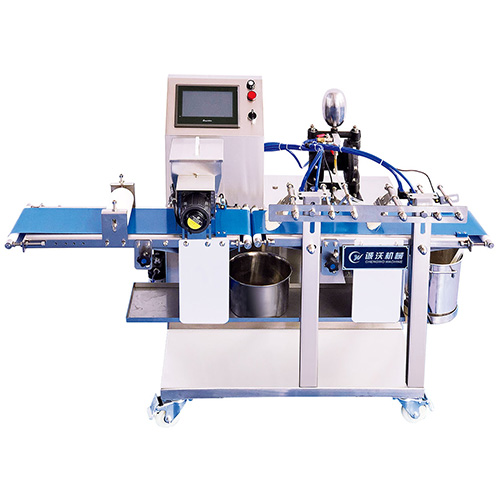

In today’s competitive food industry, efficiency, consistency, and scalability are crucial to success. As someone managing or expanding a bakery, snack production, or broader food processing operation, understanding how machinery for food can optimize your workflow is essential. Investing in the right equipment is not just about increasing output—it’s about creating a reliable production process, reducing waste, and ensuring consistent quality.
At Chengwo Food Machinery, we specialize in providing tailored solutions for industrial and commercial food production. This article will guide you through the key aspects of selecting, implementing, and optimizing machinery for food in your facility, offering actionable insights and real-world examples.

Food production machinery includes a wide range of equipment designed to mix, knead, shape, cook, or package food products. From dough mixers to automated filling lines, the right machines improve consistency and efficiency. For instance, a bakery using manual methods may struggle to maintain uniform dough elasticity across batches. Introducing an industrial dough mixer can standardize the process and reduce labor costs significantly.
Key elements of food machinery:
Data from a recent industry report shows that food production lines equipped with integrated machinery experience up to 35% faster production rates and 20% lower labor costs compared to semi-manual operations.
When choosing equipment, consider your operational goals:
Case Example:
A medium-sized bakery switched to a semi-automatic dough kneading machine and integrated an automatic sheeter. Within six months, they increased daily production from 2,000 loaves to 3,500 loaves without adding staff. The return on investment was achieved in under 12 months.
Not all machinery is created equal. Understanding the differences is crucial:
| Machine Type | Best For | Key Benefit | Example Output/Hour |
|---|---|---|---|
| Industrial Dough Mixer | Bread, pastry | Uniform mixing, reduced labor | 500–1,500 kg |
| Automated Filling Machine | Cakes, buns, pastries | Precise portioning | 3,000–6,000 units |
| Conveyor Oven | Breads, cookies | Even baking, energy-efficient | 2,000–5,000 units |
| Tray Arranging Machine | Pastries, baked goods | Optimized spacing, faster prep | 1,000 trays |
By assessing your specific needs against these categories, you can identify the optimal machinery combination for your line.
Integration is key to maximizing efficiency. For example, linking a dough mixer with an automatic shaping machine and proofing cabinet creates a seamless workflow. Sensors and IoT-enabled machines can monitor temperature, humidity, and dough consistency in real-time, reducing errors and downtime.
Real-World Case:
A bakery production line was upgraded with an integrated dough mixer, tray arranger, and proofing cabinet. By implementing sensor-based controls, they achieved 99% batch consistency, and production downtime was reduced by 15%, according to internal operational reports.
Proper maintenance ensures machinery longevity and reliability:
Routine maintenance can extend machine life by up to 25%, according to industry analysis, and prevent costly downtime.
Even with the best machinery, challenges can arise:
By addressing these challenges proactively, you ensure smooth operations and scalable growth.
Investing in machinery for food is substantial, but ROI can be quickly realized:
Example Table: ROI Comparison for Upgrading Machinery
| Scenario | Previous Output | New Output | Labor Savings | Estimated ROI (Months) |
|---|---|---|---|---|
| Semi-Automatic Line | 2,000 units/day | 3,500 units/day | 3 employees | 11 |
| Fully Automated Line | 3,000 units/day | 6,000 units/day | 5 employees | 9 |
These figures highlight how proper investment in machinery can accelerate profitability.
Integrating the right machinery for food into your production line can revolutionize your bakery or food processing operations. From improving consistency to boosting efficiency and lowering costs, modern food machinery is an investment that pays off quickly.
For expert guidance on selecting the right machines and optimizing your production, visit Chengwo Food Machinery and contact our team today.
How do I choose the right machinery for food production?
Start by assessing your production volume, product types, and automation goals. Compare features, output capacity, and energy consumption.
Can machinery for food be integrated into an existing production line?
Yes. Most modern machines are designed for modular integration, allowing seamless workflow enhancement.
What maintenance is required for machinery for food?
Regular cleaning, lubrication, calibration, and staff training are essential to ensure consistent performance.
How can I ensure product consistency across batches?
Use machinery with built-in sensors or automation features to monitor critical parameters like temperature, humidity, and mixing time.
Is investing in fully automated machinery worth it for a small bakery?
Depending on your production goals and growth plans, semi-automatic or fully automated equipment can save labor, increase output, and improve consistency, providing long-term ROI.