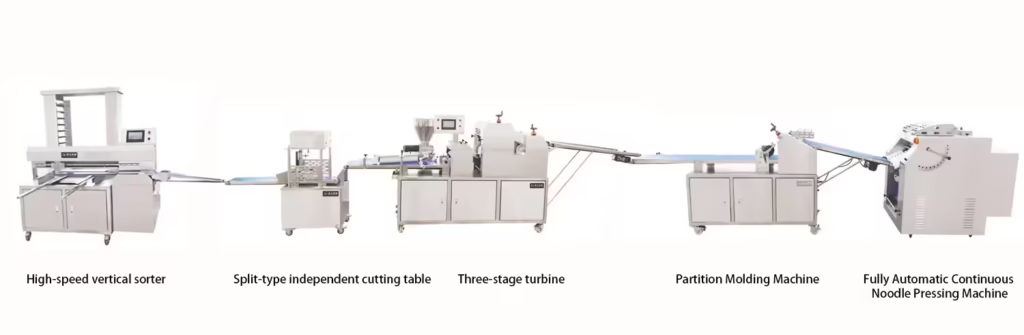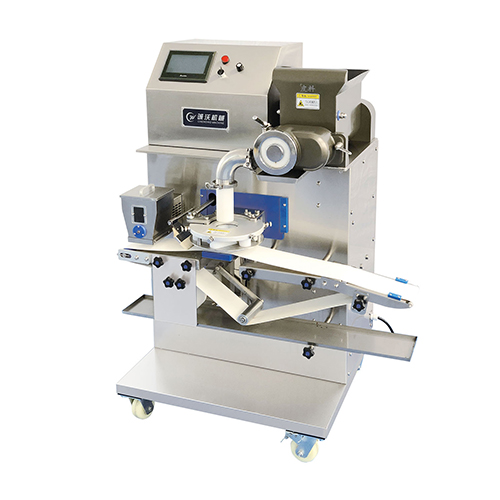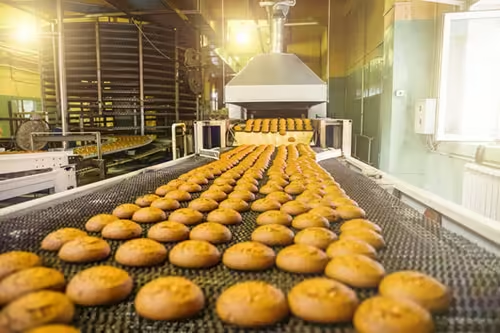

If you are planning to expand food production, reduce labor dependency, or stabilize product quality, industrial food processing machines are no longer optional—they are foundational. Today’s food manufacturers are under pressure from rising labor costs, stricter safety standards, and increasingly diverse product demands. You are expected to produce more, faster, and with consistent results.
From the perspective of an industrial food processing machine manufacturer, this guide is written to help you understand how modern equipment fits into real production environments, how to evaluate machine capabilities, and how to make decisions that actually support long-term growth rather than short-term fixes.
This article focuses on how you can apply industrial food processing machines strategically, not just technically.

An industrial food processing machine is not defined solely by size or output volume. The real definition lies in capability, durability, and system integration.
Modern industrial food processing machines typically include:
Unlike basic machinery, industrial systems are built to operate for long hours under load while maintaining tight tolerances. This distinction is critical when you evaluate equipment suppliers.
You can review general equipment design standards via ISO Food Safety Standards
Industrial food processing machines are not limited to one category of food. They support a wide range of production types, each with its own technical priorities.
For baked goods, machines handle mixing, kneading, dividing, forming, proofing, and baking. The goal is dough consistency and process rhythm. Variations in hydration or mixing energy can change final texture dramatically.
Machines are used for portioning, shaping, coating, and arranging products. Precision matters because inconsistent weight or shape affects cooking results and packaging efficiency.
Industrial systems manage viscous, sticky, or particulate fillings with controlled flow rates. This is essential for filled breads, pastries, and multi-layer products.
Heating, cooling, and stabilization processes rely on machines designed for uniform heat transfer and food safety control.
Industry process breakdowns can also be found at European Hygienic Engineering & Design Group
Consistency is often misunderstood as uniform appearance only. In production terms, consistency also means predictable yield, stable waste rates, and uniform processing times.
Industrial food processing machines achieve this through:
Studies summarized by the Institute of Food Technologists show that automated forming and portioning can reduce product giveaway by up to 5 percent, which has a direct impact on cost control.
You can explore food production efficiency research at Institute of Food Technologists
The table below highlights how industrial food processing machines differ from labor-intensive systems in real operational terms.
| Production Factor | Manual or Semi-Manual | Industrial Food Processing Machine |
|---|---|---|
| Output Stability | Operator dependent | Program controlled |
| Labor Requirement | High | Reduced |
| Product Uniformity | Variable | Highly consistent |
| Scalability | Limited | Designed for expansion |
| Food Safety Control | Process dependent | System enforced |
| Long-Term Cost | Unstable | Predictable |
This comparison is often the turning point when manufacturers reassess their production strategy.
A mid-sized food producer faced increasing demand for multiple dough-based products with different shapes and fillings. Manual forming limited daily output, while quality complaints increased during peak shifts.
By integrating a modular industrial food processing machine line, the producer was able to:
The key decision was choosing machines that allowed recipe changeovers through parameter adjustments rather than mechanical reconfiguration. This flexibility prevented production bottlenecks.
When selecting equipment, performance specifications alone are not enough. You should examine how machines are designed to behave over time.
Key evaluation elements include:
Look for rigid frames, vibration control, and access points for maintenance. Weak structure leads to long-term accuracy loss.
Machines should allow you to store and recall production settings. Manual recalibration increases error risk.
Smooth surfaces, minimal crevices, and tool-free disassembly improve cleaning efficiency and compliance.
Machines should connect logically with mixers, conveyors, and packaging systems without forcing custom workarounds.
Technical evaluation guidelines can also be found through USDA Food Processing Guidance
Energy consumption has become a critical purchasing factor. Industrial food processing machines today are designed to reduce unnecessary motion, idle time, and heat loss.
According to lifecycle assessments referenced by industrial equipment studies, optimized motor control and thermal insulation can reduce energy usage by 10–20 percent over older designs.
Choosing machines with efficient drives and controlled heating zones contributes directly to operating cost reduction and sustainability targets.
For general industrial sustainability trends, see World Resources Institute
Many production issues stem from early decision errors rather than machine performance itself.
You should avoid:
An industrial food processing machine should match your production strategy, not force you to redesign your process around it.
Growth is not only about increasing volume. It also includes product diversification, regulatory adaptation, and market responsiveness.
Well-designed industrial food processing machines allow you to:
This flexibility is often what separates stable producers from those constantly reacting to operational issues.
Industrial food processing machines are not just tools—they are the backbone of modern food manufacturing. When selected and applied correctly, they give you control, predictability, and room to grow without sacrificing quality.
If you are planning to upgrade or redesign your production line, working with an experienced food equipment manufacturer can help you avoid costly missteps and align your machinery with real production goals.
At Chengwo Food Machinery, we focus on helping food producers design equipment systems that support long-term efficiency, consistency, and scalability.
If you are ready to evaluate your production process or explore suitable industrial food processing machine solutions, the next step is to start a technical conversation—because the right system begins with the right questions.
What is the difference between industrial and commercial food processing machines
Industrial food processing machines are designed for continuous operation, higher loads, and system integration, while commercial machines are typically used for smaller-scale or batch-based production.
How long do industrial food processing machines typically last
With proper maintenance, many systems operate reliably for over 10 years, especially when structural and control components are well designed.
Can one industrial food processing machine handle multiple products
Yes, if designed for parameter adjustment and modular tooling, many machines support multiple product types without major downtime.
How important is automation for food safety
Automation reduces human contact, standardizes processes, and improves traceability, all of which contribute to better food safety control.
What should you prioritize first when upgrading equipment
Start with processes that create bottlenecks or quality variation. These areas deliver the fastest return on investment.