

Industrial baking has revolutionized the way large-scale bakeries and food processing facilities operate. If you are running a bakery or managing a food production line, understanding how to leverage industrial baking technology is critical to increasing efficiency, consistency, and overall profitability. This article guides you through the essentials of industrial baking, equipment selection, optimization strategies, and practical examples so you can make informed decisions for your operation.
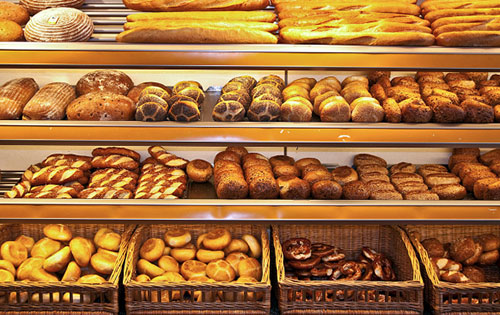
Industrial baking refers to large-scale, mechanized production of baked goods, including bread, pastries, cakes, and specialty items. Unlike artisanal or small-batch baking, industrial baking focuses on high throughput, consistency, and automation.
Case Example: A mid-sized bakery producing 3,000 loaves per day integrated a spiral mixer, automatic dough divider, and high-capacity industrial oven. Within two months, the bakery reported a 28% increase in output and a 15% reduction in labor costs.
Industrial baking encompasses several equipment categories, each designed for a specific stage in production. Here’s a simplified overview:
| Equipment | Function | Typical Capacity | Operational Benefit |
|---|---|---|---|
| Spiral Mixer | Mixes flour, water, yeast, and other ingredients | 20–500 kg/batch | Uniform dough, improved elasticity |
| Dough Divider | Divides dough into consistent portions | 50–1,000 pieces/hour | Reduces human error, ensures product uniformity |
| Dough Sheeter | Flattens dough for pastries and laminated products | 10–200 kg/hour | Enables precise dough thickness |
| Proving/Proofing Cabinet | Ferments dough under controlled conditions | 50–500 trays | Maintains consistent rising and texture |
| Industrial Oven | Bakes large quantities efficiently | 1,000+ loaves/day | Even baking, precise temperature control |
| Cooling Conveyor | Gradually cools baked goods | N/A | Preserves texture and prevents spoilage |
Understanding the functions of each component helps you identify which equipment is essential for your bakery and where investment provides the most ROI.
When selecting equipment for your bakery, you need to assess your production requirements carefully. Key considerations include:
Estimate your daily and weekly production targets. A bakery producing 5,000 loaves per day needs higher-capacity mixers, dividers, and ovens compared to a bakery producing 500 loaves daily.
Consider the variety of products you bake. Bread, croissants, and mooncakes all require different processing conditions. Certain equipment may be versatile, but some processes like laminated pastry require specialized machinery.
Industrial baking equipment can be partially or fully automated. Fully automated systems reduce labor costs and improve consistency but require higher upfront investment.
Check for ease of cleaning, durability, and availability of spare parts. Long-term reliability is critical for high-volume operations.
Case Example: A bakery producing mooncakes implemented a pastry production line including automatic dough forming, filling, and baking. Within three months, production efficiency improved by 40% and error rates decreased by 22%, according to internal quality tracking reports.
Efficient layout and workflow design can drastically improve productivity in industrial baking. Consider the following steps:
Tip: Map your bakery workflow using software or a layout plan. Visualizing each stage helps identify potential inefficiencies before investing in equipment.
Energy consumption is a significant factor in industrial baking. Modern industrial ovens and mixers are designed for energy efficiency without compromising performance. Consider these strategies:
According to Food Processing Insights, bakeries using energy-efficient industrial ovens can reduce energy costs by 15–20% annually.
| Bakery Type | Equipment Used | Daily Output | Efficiency Gain |
|---|---|---|---|
| Large Bread Bakery | Spiral Mixer, Twin-Shaft Oven | 5,000 loaves | 30% faster production |
| Pastry Facility | Planetary Mixer, Sheeter, Proving Cabinet | 1,500 kg dough | 25% labor savings |
| Mid-Scale Bakery | Semi-Automated Dough Divider & Oven | 2,000 loaves | 18% defect reduction |
| Specialty Bakery | Fully Automated Line | 1,200 mooncakes | 40% faster throughput |
These examples highlight how industrial baking equipment transforms operations from manual, inconsistent production to streamlined, high-efficiency workflows.
Even with advanced equipment, challenges can arise:
Pro Tip: Keep a log of each batch including ingredient ratios, mixing times, proofing conditions, and oven temperatures. This helps identify patterns when issues arise.
How do I know which industrial baking equipment is right for my bakery?
Assess your production volume, product variety, automation needs, and space constraints. Consulting with a food machinery expert helps ensure a proper match.
Can one production line handle multiple types of baked goods?
Yes, versatile equipment like spiral mixers and proofing cabinets can handle various dough types, though some specialized products may require dedicated machines.
How much does it cost to automate an industrial bakery line?
Costs vary depending on automation level, capacity, and product complexity. Many bakeries recoup investment in 1–3 years through efficiency gains and labor reduction.
What maintenance is required for industrial baking machines?
Daily cleaning, weekly inspections, and periodic servicing of moving parts are essential for long-term reliability.
How can I improve energy efficiency in industrial baking?
Use energy-efficient ovens, implement heat recovery systems, and optimize mixer operations with variable frequency drives.
