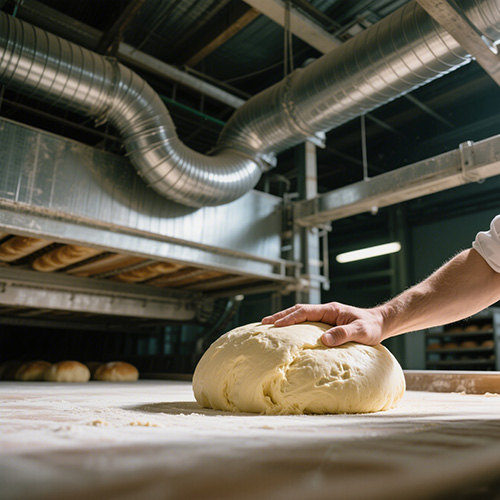

Running a bakery or food processing facility is all about efficiency, consistency, and product quality. One of the most essential pieces of equipment in modern bakeries is the dough kneading machine. With the right machine, you can reduce labor costs, improve dough uniformity, and scale up production without sacrificing quality. In this guide, we’ll help you understand the different types of dough mixers, how to choose the right one for your bakery, and practical strategies to optimize your operations.
A dough kneading machine is designed to mix flour, water, yeast, and other ingredients into a uniform dough with the right elasticity and texture. Unlike manual kneading, machines provide consistent results every time, which is critical when producing large batches of bread, pastries, or other baked goods.
By using a dough mixer, your bakery can maintain consistent product quality and improve production efficiency. According to industry reports, bakeries that implement automated kneading machines can reduce manual labor by up to 40%, while increasing output by 25%.
Not all dough mixers are created equal. Choosing the right type depends on your production needs, batch size, and dough types.
Spiral machines are ideal for high-hydration doughs, like pizza or artisan bread. The spiral mixing action gently folds the dough, maintaining gluten structure for optimal elasticity.
Planetary mixers are versatile and suitable for smaller batches or multiple dough types. The mixing tool rotates while orbiting around the bowl, ensuring uniform mixing of ingredients.
Twin-shaft kneaders are built for industrial-scale bakeries. They are fast, powerful, and capable of handling large quantities of dough efficiently.
| Type | Batch Capacity | Best For | Speed |
|---|---|---|---|
| Spiral | 20–100 kg | High-hydration doughs | Medium |
| Planetary | 5–50 kg | Multiple dough types | Low–Medium |
| Twin-Shaft | 100–500 kg | Large-scale industrial dough | High |
Selecting the best dough mixer for your bakery requires careful consideration. Here are the main factors to evaluate:
For example, a mid-sized bakery producing 500 kg of dough daily would benefit more from a spiral dough kneader with automation, while a smaller artisanal bakery may opt for a planetary mixer.
A bakery producing both sandwich bread and artisan rolls implemented a spiral dough mixer. Before automation, the bakery relied on manual kneading, which required six employees working in shifts. After installing the machine:
This demonstrates how a dough kneading machine can transform operations, improve quality, and enhance profitability.
To maximize the benefits, it’s crucial to integrate the machine properly:
By following these guidelines, you ensure that your investment in a dough mixer yields consistent and high-quality results.
While dough kneading machines require upfront investment, the long-term benefits usually outweigh the cost. Below is a simplified example for a medium-scale bakery:
| Expense/Benefit | Manual Kneading | Dough Machine (Spiral) |
|---|---|---|
| Labor Cost / Year | $60,000 | $35,000 |
| Dough Waste Reduction | N/A | 10% |
| Output (kg/day) | 400 | 520 |
| ROI (Years) | N/A | 1.8 |
This table shows how investing in the right equipment not only saves labor but also boosts output and reduces waste, leading to faster ROI.
Even with a quality dough mixer, issues can occur:
Regular training of staff ensures that minor issues are quickly resolved, keeping your bakery running smoothly.
The next generation of dough kneading machines incorporates:
Adopting these innovations ensures your bakery stays competitive and scalable.
How do I choose the best dough kneading machine for my bakery?
Consider production volume, dough types, automation level, and energy efficiency. Spiral, planetary, and twin-shaft machines serve different needs.
Can a dough kneading machine handle multiple types of dough?
Yes, machines like planetary mixers are versatile, while spiral and twin-shaft machines excel in specific applications.
How often should I maintain my dough mixer?
Follow the manufacturer’s guidelines, typically daily for cleaning and weekly for deeper inspections.
What is the typical lifespan of a commercial dough mixer?
With proper maintenance, most machines last 10–15 years.
Will a dough mixer save labor costs?
Yes, automation reduces manual effort and improves consistency, often lowering labor expenses by 30–40%.