

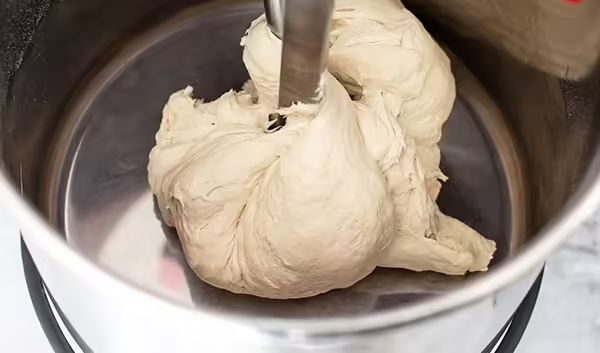
When running a bakery or a food production line, the equipment you choose has a direct impact on your efficiency, product quality, and overall profitability. A dough mixer machine commercial is designed to mix flour and other ingredients while kneading dough consistently and efficiently, delivering the uniform texture and elasticity necessary for high-quality baked goods. Unlike manual kneading, commercial mixers save time, reduce labor, and ensure every batch meets your quality standards.
According to industry data from Food Processing Insights, automated dough mixers can increase production efficiency by up to 40% while maintaining consistent dough quality. Investing in the right commercial dough mixer is therefore a strategic decision that can enhance your bakery operations and reduce operational risks.
Spiral mixers are highly effective for high-gluten dough, such as bread. Their spiral-shaped agitators work in tandem with a rotating bowl to knead dough thoroughly without generating excessive heat, preserving the dough’s structure. This type of mixer is ideal for bakeries producing large batches consistently.
Planetary mixers offer versatility for multiple dough types, including pastries, cookies, and light bread dough. The planetary motion ensures even mixing, making these machines perfect for bakeries with diverse product lines or smaller batch requirements.
Horizontal mixers are designed for industrial-scale production. They are capable of handling large volumes of dough efficiently and are often integrated into automated production lines, supporting continuous mixing and reducing downtime.
Continuous mixers are ideal for high-volume operations where dough production needs to be consistent and ongoing. These machines allow for seamless integration into fully automated lines, improving overall efficiency and output reliability.
When selecting a dough mixer machine commercial, consider the following features:
Data from Industrial Bakery Equipment Reports shows that energy-efficient mixers can reduce electricity consumption by up to 20%, contributing to long-term cost savings and sustainable operations.
To select the right dough mixer machine commercial, evaluate your production requirements:
Matching the machine to your specific needs ensures optimal efficiency, minimal downtime, and a strong return on investment.
Commercial dough mixers are used across a variety of bakery and food production scenarios:
These applications illustrate the versatility of commercial dough mixers in improving both efficiency and product quality across operations of varying scales.
| Factor | Dough Mixer Machine Commercial | Manual Mixing |
|---|---|---|
| Consistency | High, repeatable | Variable |
| Labor Requirement | Low | High |
| Production Speed | Fast | Slow |
| Scalability | Easily scalable | Limited |
| Dough Quality | Uniform | Depends on skill |
While manual mixing may work for small-scale or artisanal operations, scaling production efficiently requires a commercial dough mixer machine. It ensures product uniformity and reduces labor costs significantly.
Proper maintenance is crucial for extending the lifespan of your commercial dough mixer machine and ensuring food safety compliance:
Regular maintenance helps avoid production downtime and guarantees consistent dough quality over the life of the machine.
Investing in a dough mixer machine commercial requires upfront capital, but the long-term benefits often outweigh the costs:
Industry reports indicate that most commercial dough mixers deliver a return on investment within 12 to 24 months, depending on production scale and operational efficiency.
Choosing the right dough mixer machine commercial is essential for improving efficiency, ensuring consistent product quality, and achieving a strong ROI. By evaluating your production needs, understanding different mixer types, and considering key features, you can make an informed decision that supports long-term bakery success.
What is the best dough mixer machine commercial for my bakery?
It depends on your production needs, but spiral mixers are generally recommended for high-volume bread production due to their efficiency and dough quality.
Spiral mixer vs planetary mixer: which is better?
Spiral mixers excel with heavy, high-gluten dough, while planetary mixers offer more versatility for lighter dough and pastries.
How do I choose the right capacity?
Consider your daily production volume and choose a machine that can handle your largest batch efficiently.
Can the machine handle high-hydration dough?
Yes, most modern commercial dough mixers have adjustable speed and torque settings to handle a wide range of dough consistencies.
How long will the machine last with proper maintenance?
With regular cleaning, inspection, and preventive maintenance, a commercial dough mixer can reliably operate for many years.
If you’re unsure which dough mixer machine commercial is best for your bakery or production line, our experts are ready to help. Contact us today for a personalized consultation and explore solutions to improve efficiency, consistency, and output. Don’t wait to optimize your operations—get in touch now and take your bakery production to the next level.
