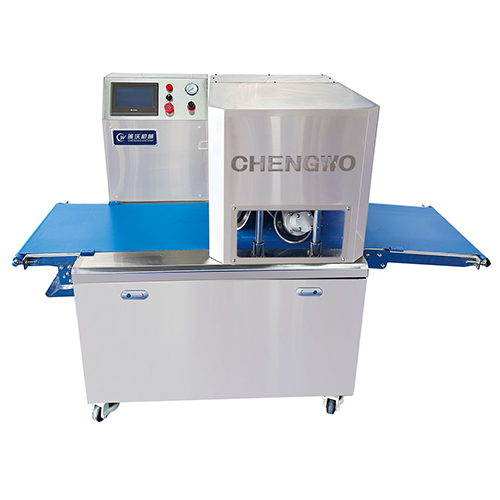

Running a bakery or food production facility efficiently requires reliable and high-performance equipment. A commercial bakery oven, often integrated into an automated bread production system like the Bread Host, allows you to streamline multiple stages of production—mixing, fermentation, shaping, and baking—while maintaining consistent product quality.
The Bread Host is engineered for industrial bread production, chain bakeries, and large-scale food processing facilities. Its advanced temperature and humidity control ensures precise management at every stage of the baking process, producing bread with superior texture, crust, and flavor. According to data from Food Processing Equipment Insights, bakeries that integrate automated ovens into their production lines see a 40-50% increase in efficiency and a notable reduction in labor costs.

Efficient dough mixing is the foundation of any high-volume bakery. Bread Host uses programmable mixers to create uniform dough consistently. This eliminates inconsistencies common with manual mixing and reduces reliance on skilled labor. Precise timing and speed control also prevent over- or under-kneading, preserving the ideal gluten structure for high-quality bread.
Fermentation determines bread volume, texture, and flavor. Bread Host offers automated proofing with accurate temperature and humidity control. Real-time monitoring ensures every batch develops evenly, whether you are baking sourdough, whole grain, or artisan-style loaves.
Automated shaping systems such as rollers, dividers, and molders provide uniform loaf size and appearance. This consistency is essential for commercial bakeries that package bread or supply chain stores. The Bread Host accommodates multiple bread types, including artisan and sandwich loaves.
The integrated ovens in Bread Host provide even heat distribution and precise temperature control. This ensures that every loaf is baked uniformly with a perfect crust and soft, well-structured interior. Automation also reduces the risk of human error that can affect texture and appearance.
Commercial bakery ovens are available in several types depending on your production requirements:
Selecting the right type ensures that your bakery achieves the desired throughput without compromising quality.
Using a commercial bakery oven like Bread Host provides multiple benefits:
| Factor | Bread Host / Commercial Bakery Oven | Manual Baking |
|---|---|---|
| Dough Mixing | Automated, consistent | Manual, variable |
| Proofing | Precise temperature & humidity | Less controlled |
| Shaping | Uniform size and shape | Depends on skill |
| Baking | Even heat distribution | Varies per batch |
| Labor Requirement | Reduced | High |
| Production Speed | Fast | Slow |
Automation reduces bottlenecks and ensures uniform quality, making it easier for bakeries to meet high-volume production demands.
Before purchasing a bakery oven commercial, evaluate these factors:
Proper assessment ensures that your equipment investment supports your business growth efficiently.
Maintaining your equipment is essential for long-term reliability:
Well-maintained ovens can operate reliably for 10–20 years, depending on production intensity and usage patterns.
Investing in a commercial bakery oven or integrated Bread Host system involves upfront costs but delivers long-term value:
Industry reports indicate that bakeries typically achieve ROI within 12–24 months after upgrading to automated systems.
Investing in a commercial bakery oven, particularly an automated system like Bread Host, is essential for modern bakeries seeking efficiency, consistency, and scalability. By selecting the right equipment based on production volume, bread type, and automation needs, bakeries can increase output, reduce labor costs, and maintain high-quality bread at scale.
What is the ideal bakery oven commercial for small vs large bakeries?
Small bakeries may opt for semi-automatic ovens or compact Bread Host models, while large bakeries benefit from industrial-scale automated systems.
Can Bread Host handle artisan or specialty bread?
Yes, it supports high-hydration doughs, sourdough, whole grain, and specialty breads with consistent results.
How many loaves per hour can a commercial bakery oven produce?
Production varies by oven size; small units produce a few dozen loaves per hour, while industrial lines can produce hundreds or thousands.
What maintenance is required for long-term use?
Daily cleaning, lubrication, inspection, and replacement of worn components are essential to maintain efficiency and longevity.
How to choose between gas, electric, semi-automatic, or fully automatic ovens?
Consider production volume, energy costs, available labor, and desired automation level. Fully automatic ovens reduce labor but require higher upfront investment.
If you’re unsure which commercial bakery oven or automated system is best for your bakery, our experts are ready to help. Contact us today for a personalized consultation and explore solutions that improve efficiency, reduce labor, and ensure consistent bread quality. Don’t wait to optimize your production—get in touch now and elevate your bakery’s output.