
In professional pizza production, dough quality plays a decisive role in product consistency and customer satisfaction. From independent pizzerias to large restaurant chains and central kitchens, the right dough mixing equipment directly influences efficiency, texture, and workflow stability. As a professional manufacturer supplying mixing solutions to global food businesses, we have seen how the right equipment choice can significantly improve daily operations.
This guide explains how pizza dough mixers work, compares common mixer types, highlights essential features, and outlines why sourcing equipment directly from a factory can be a smart long-term decision.
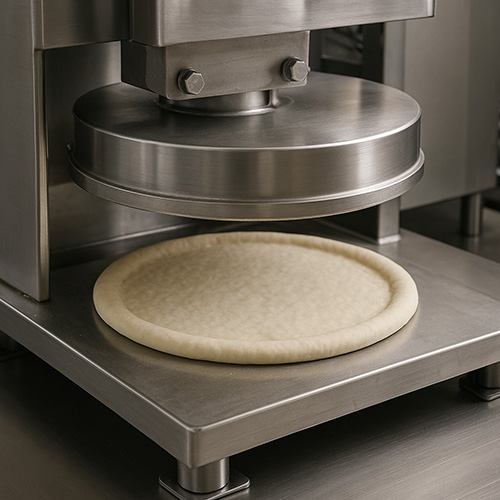
A pizza dough mixer is designed to combine ingredients evenly while developing the gluten structure required for elastic, well-fermented dough. In commercial environments, manual mixing or underpowered machines often lead to inconsistent hydration, overheating, or unstable results between batches.
Well-designed professional mixers help achieve:
Reliable mixing performance is a key foundation for maintaining pizza quality at scale.
Different kitchen setups require different mixer designs. Understanding the main categories helps businesses select equipment that matches their production goals.
Spiral mixers are widely used in pizza-focused kitchens. The rotating bowl and spiral hook work together to gently knead dough while minimizing friction. This design supports stable dough temperature and is especially suitable for high-hydration recipes and continuous production.
Planetary mixers are flexible machines commonly used in bakeries and restaurants preparing a variety of foods. They can handle pizza dough in smaller batches but are generally better suited for lighter mixing tasks.
Fork mixers are often chosen by artisan pizza makers. They provide gentle mixing that preserves dough structure but operate at a slower pace and are less practical for high-volume environments.
The choice between spiral and planetary designs depends largely on production volume and dough characteristics.
| Aspect | Spiral Mixer | Planetary Mixer |
|---|---|---|
| Batch Size | Medium to large | Small to medium |
| Dough Development | Strong and consistent | Moderate |
| Production Efficiency | High | Medium |
| Versatility | Pizza-focused | Multi-purpose |
| Typical Users | Pizzerias, chains, factories | Small kitchens |
For businesses centered on pizza production, spiral-style machines usually deliver more stable results and higher efficiency.
When evaluating professional dough mixing equipment, several technical factors directly affect reliability and lifespan.
The bowl size should match peak production demand without overloading the machine.
Dense pizza dough requires sufficient torque for smooth, uninterrupted mixing cycles.
Multiple speed options allow better control over dough structure and hydration.
Stainless steel components improve hygiene, durability, and ease of cleaning.
Protective guards and international certifications help ensure safe operation and regulatory compliance.
Capacity planning should be based on daily output and workflow rhythm.
Manufacturers can assist in capacity selection to avoid unnecessary energy consumption or production bottlenecks.
Professional dough mixers are designed for continuous operation and higher mechanical loads. Compared with household machines, they offer:
For any commercial kitchen, professional-grade equipment is essential for reliable results.
Sourcing equipment directly from a factory offers clear advantages for professional buyers:
As a dedicated equipment manufacturer, we focus on providing tailored solutions rather than one-size-fits-all products.
Professional dough mixing machines are widely used in:
Their adaptability makes them a core asset in modern food operations.
Pricing varies depending on:
Rather than focusing only on initial cost, businesses should consider long-term efficiency, maintenance needs, and service life. Factory-direct purchasing often delivers better overall value.
A dependable supplier should demonstrate:
Partnering with an experienced manufacturer helps ensure equipment reliability and smoother long-term operation.
Selecting the right dough mixing solution is a crucial step in building a stable and efficient pizza production process. By understanding equipment types, performance features, capacity planning, and supplier capabilities, businesses can make confident purchasing decisions.
As a professional manufacturer serving global markets, we provide durable, efficient, and customizable mixing equipment designed for real-world production needs. If you are planning to upgrade or expand your pizza operation, our team is ready to offer practical advice and factory-direct solutions.
Contact us today to discuss your requirements and receive a tailored recommendation and competitive quotation.
For most pizzerias and restaurants, spiral-style mixers are preferred because they provide consistent dough development, stable temperature control, and higher efficiency for pizza-focused production.
Capacity should be based on daily dough output and peak demand. Small shops typically use 10–20 kg models, while larger restaurants and central kitchens require higher-capacity equipment.
Yes. Professional-grade mixers are designed for heavy-duty operation, featuring reinforced motors and durable components that support continuous mixing in commercial kitchens.
Purchasing directly from a manufacturer offers better pricing, customization options, consistent quality control, and direct technical support without intermediary costs.
Yes. Many manufacturers provide customization services, including voltage options, capacity adjustments, and OEM branding to meet different market requirements.
If you’re unsure which pizza mixer is best for your restaurant, pizzeria, or production facility, our experts are here to help. Contact us today for a personalized consultation and get professional recommendations directly from an experienced manufacturer. Don’t settle for guesswork—reach out now to secure reliable equipment that supports consistent dough quality and long-term performance.