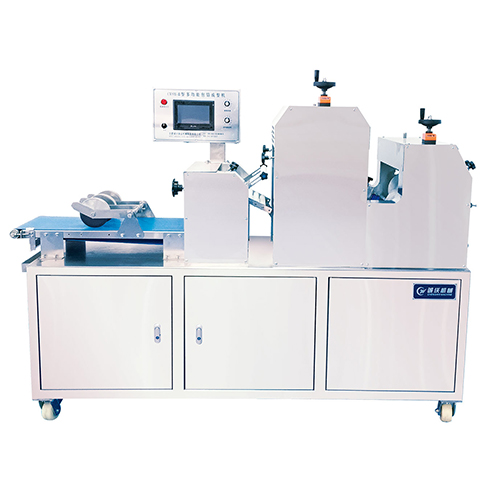

In today’s competitive food industry, optimizing your production workflow is essential. If you run a bakery, restaurant, or large-scale food processing facility, a commercial food preparing machine can transform the way you handle raw ingredients, streamline operations, and maintain consistent product quality. By understanding the capabilities, advantages, and selection criteria of these machines, you can make informed decisions that directly impact efficiency and profitability.
In this guide, you will explore how these machines work, the different types available, real-world applications, and practical tips for selecting the right equipment for your kitchen or production line.
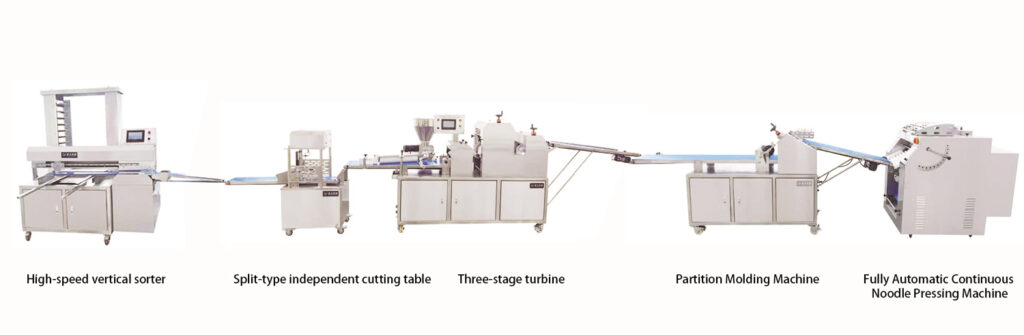
Commercial food preparing machines are industrial-grade equipment designed to process large quantities of ingredients with minimal human intervention. Unlike smaller, household devices, these machines are built to handle high-volume operations with precision, reliability, and consistency.
Key elements of a commercial food preparing machine include:
For example, in a mid-sized bakery, a single commercial dough mixer can replace the manual labor of several employees, ensuring that dough is mixed uniformly every time.
When considering automation, it’s important to understand the variety of machines available and their applications:
Used for dough, batters, and fillings, food mixers ensure consistent texture and elasticity.
These machines can wash, chop, and puree large quantities of produce, saving hours of manual labor.
From grinding to forming, these machines maintain uniformity and hygiene, reducing contamination risks.
Advanced machines combine several steps, such as mixing, cutting, and portioning, into a single workflow.
Consider a bakery producing 2,000 loaves per day. Before automation, staff manually mixed dough, which caused inconsistencies in texture and required long preparation times. By implementing a commercial food preparing machine, the bakery achieved the following:
This demonstrates the direct impact of choosing the right equipment on both product quality and operational efficiency.
When selecting a machine, focus on features that align with your production needs:
| Machine Type | Key Function | Daily Capacity | Ideal For | Special Features |
|---|---|---|---|---|
| Dough Mixer | Mix and knead dough | 500–5000 kg | Bakeries, pastry shops | Adjustable speed, programmable cycles |
| Vegetable Processor | Wash, chop, shred | 200–2000 kg | Restaurants, catering | Multi-speed blades, automated feeding |
| Meat Grinder | Grind and form protein | 100–1000 kg | Delis, meat processing | Safety sensors, stainless steel |
| Multi-Functional Unit | Mix, portion, shape | 100–1500 kg | Bakeries, food factories | Multi-stage processing, touch-screen control |
A medium-scale food factory integrated a commercial food-preparing machine that could handle dough mixing, vegetable chopping, and portioning in one unit. This allowed them to produce bakery items and ready-to-eat meals simultaneously. Data showed:
This example highlights how multifunctional machines can optimize resources and boost ROI.
Commercial food preparing machines are essential tools for any modern food business looking to increase efficiency, maintain product quality, and scale production. By understanding your operational needs and selecting the right equipment, you can transform your workflow and achieve measurable results.
For more information on high-quality machines and personalized guidance, visit Chengwo Food Machinery today and explore our range of commercial food preparing machines that suit your bakery, restaurant, or food processing facility.
What is the difference between commercial and industrial food preparing machines?
Commercial machines are designed for medium to large operations, while industrial machines target high-capacity manufacturing plants.
Can one machine handle multiple types of food processing?
Yes, multi-functional units can mix, chop, portion, and even shape products, reducing the need for multiple machines.
How do I maintain my commercial food preparing machine?
Regular cleaning, lubrication of moving parts, and periodic inspection of motors and sensors ensure longevity.
Are these machines energy efficient?
Modern units are designed with energy-saving motors and programmable cycles, reducing electricity usage.
How do I determine the right capacity for my kitchen?
Analyze your peak daily production and select a machine that can handle slightly above your maximum expected load for scalability.