

Commercial baking has evolved far beyond traditional ovens and manual labor. Today, the integration of advanced machinery, automated lines, and precise process controls allows you to achieve consistent quality, higher output, and reduced operational costs. If you are running a bakery or food processing facility, understanding how to implement commerical baking solutions effectively can transform your operations.
In this guide, we will explore commercial baking from the perspective of food equipment manufacturers, provide practical insights, detailed case studies, and actionable advice to help you optimize your bakery production line.
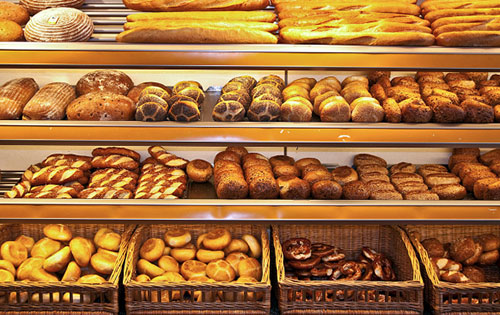
Commercial baking involves producing baked goods at scale, using industrial equipment designed for efficiency, consistency, and high-volume output. Unlike home or artisanal baking, commercial operations rely on specialized machines, including:
These machines ensure that dough consistency, baking temperature, and product shape remain uniform across hundreds or thousands of units daily.
Example: A mid-sized bakery producing 3,000 loaves per day can maintain consistent quality only by implementing a commercial baking line where mixing, proofing, and baking are fully integrated.
When considering upgrading or starting a bakery, commercial baking equipment offers several measurable benefits:
Case in point: A bakery transitioning from small-batch production to a commercial baking line increased output from 1,000 to 4,500 units per day while maintaining product uniformity.
Your commercial baking success depends heavily on selecting the appropriate dough mixers and kneading machines. Key considerations include:
Table: Common Dough Mixers Comparison
| Mixer Type | Capacity (kg) | Ideal Use Case | Automation Features |
|---|---|---|---|
| Spiral Mixer | 20–200 | Bread, high-hydration dough | Timer, variable speed |
| Planetary Mixer | 10–100 | Pastry, cookie dough | Speed control, programmable |
| Horizontal Mixer | 50–500 | Large-scale bakery | Auto feed, sensor-controlled |
Ovens are the heart of commercial baking. Choosing the right oven ensures even baking, reduces energy consumption, and supports consistent output.
Example: A bakery using a tunnel oven combined with a commercial dough mixer cut baking time per batch from 45 minutes to 25 minutes while maintaining the same crust quality.
Automation is a game-changer. A fully automated commercial baking line can connect dough preparation, proofing, baking, and cooling, enabling:
Case Study: A commercial bakery implemented an automated proofing cabinet and dough divider system. Production efficiency increased by 60%, and waste from overproofed dough was nearly eliminated.
Maintaining consistent quality and meeting food safety standards are crucial in commercial baking:
Example: Data from a commercial bakery showed that using temperature-controlled ovens reduced product defects from 8% to under 2% per batch over six months.
Background: A bakery producing 1,500 loaves daily struggled with inconsistent dough and uneven baking.
Solution: They invested in a commercial dough mixer, automated proofing cabinets, and a tunnel oven line.
Results:
Selecting the right combination of equipment requires assessing your production goals, product type, and available space. Key factors include:
Tip: Always request equipment specifications, trial runs, or demo sessions before committing to large-scale machinery purchases.
What is the difference between commercial baking and industrial baking?
Commercial baking usually refers to bakeries producing high volumes with some automation, while industrial baking involves fully automated, high-capacity production lines for mass distribution.
How do I choose the right commercial dough mixer?
Consider your typical batch size, dough type, and level of automation required. Spiral mixers are great for bread, while planetary mixers suit pastries.
Can automation reduce labor costs?
Yes, integrating automated proofing, mixing, and baking equipment can reduce manual labor requirements by up to 40% in mid-sized operations.
How do I ensure product consistency?
Use equipment with programmable settings, monitor temperatures and humidity, and calibrate machinery regularly.