

If you’ve ever found yourself staring at a production line, calculating the cost of every ounce of overfill, or dealing with the messy reality of inconsistent fills, you know the pain. Choosing the right food filling machine isn’t just a purchase—it’s one of the most critical decisions for your bottom line, product quality, and operational sanity.
But with so many types and technical specs, how do you even begin? This guide is designed to cut through the noise. We’ll walk you through the different technologies, help you match a machine to your product, and highlight key factors you might not have considered. Let’s find the perfect filling solution for you.
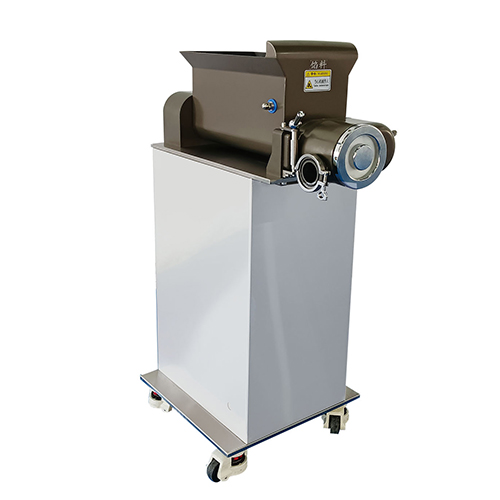
At its core, a food filling machine is designed to automate the process of dispensing a precise amount of a food product into a container. But the right machine does so much more. It’s your frontline defense against product giveaway, your guarantee of consistent presentation, and a key driver of your overall production speed. In an industry where margins are tight, the precision and efficiency of your filling equipment directly impact your profitability.
Not all products are created equal, and neither are filling machines. Here’s a breakdown of the most common types and the products they excel with.
Think of a syringe. Piston fillers work by drawing a product into a cylinder and then pushing it out into a container.
This machine uses a rotating roller to compress a flexible tube, pushing the product forward without it ever touching the pump mechanism.
As the name implies, this method relies on gravity to fill containers. The product is held in a tank and flows into containers once they are in place.
This machine creates a vacuum inside the container, which draws the product in. It’s a remarkably gentle process.
Let’s demystify the process of one of the most common types, the piston filler. It’s a four-step cycle:
This mechanical precision is why piston fillers can achieve fill accuracies of ±1% or better, directly tackling the problem of product giveaway.
Before you talk to a salesperson, answer these questions. They will form the foundation of your decision.
Consider “DeliCup Bakery,” a company specializing in gourmet dessert parfaits. They were using a manual liquid filling pump for their layers of mousse and fruit compotes. The results were inconsistent, labor-intensive, and slow.
Their challenge: Inefficient manual filling causing bottlenecks and uneven product appearance.
The solution: They integrated a dual-head automatic filling machine with two separate hoppers—one for mousse and one for compote. The machine was programmed for precise, alternating fills.
The result: Their output increased by 50%, labor costs decreased, and most importantly, every parfait leaving their line looked identical—elevating their brand perception and reducing customer complaints to zero.
You don’t have to navigate the complex world of food filling machine alone. The right partner doesn’t just sell you a machine; they provide a solution tailored to your unique products, challenges, and ambitions.
At Chengwo Food Tech Machinery Co., Ltd., we combine decades of engineering expertise with a deep understanding of food production. We don’t just promise performance; we prove it.
Take the next step today: Contact us to schedule a free, no-obligation product filling analysis. We’ll use your actual product to demonstrate the perfect filling solution for your business.
What is the typical price range for a food filling machine?
The cost varies dramatically based on automation and complexity. A semi-automatic piston filler can start from $5,000, while a fully automated, multi-lane rotary filling system can exceed $100,000. The key is to align the investment with your specific output and precision requirements.
How do I clean and maintain my food filling machine?
Most food filling machines are designed with sanitation in mind. Daily disassembly of product-contact parts (like pistons and cylinders) for cleaning is standard. Following the manufacturer’s recommended maintenance schedule for seals and moving parts is crucial to prevent unplanned downtime.
What food safety certifications should I look for?
Look for food filling machines constructed with materials like 304 or 316 stainless steel and designs that comply with global standards. Critical certifications include the EHEDG (European Hygienic Engineering & Design Group) for hygienic design, which ensures the machine can be effectively cleaned and is suitable for global food production facilities.