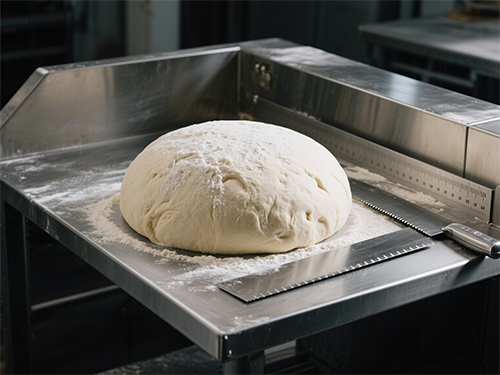

In today’s competitive baking industry, consistency and efficiency play a crucial role in maintaining product quality and controlling operating costs. For commercial bakeries and food production facilities, professional dough preparation equipment is essential to meet growing demand while ensuring stable results.
This guide explains how modern kneading equipment supports bakery operations, what factors to consider when selecting a machine, and how sourcing directly from a manufacturer can benefit your business in the long run.
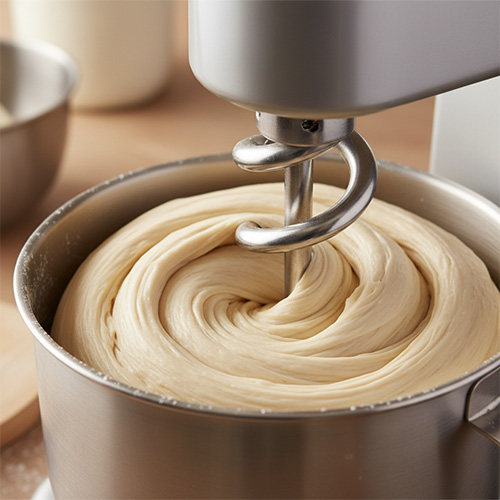
A bread kneading machine is designed to automate the dough preparation process by mixing and kneading ingredients evenly. By applying controlled mechanical movement, the machine helps develop gluten structure and achieve uniform dough texture, which is difficult to maintain through manual labor alone.
Compared with basic mixers, professional kneading equipment is optimized for bread, pizza, and high-gluten doughs. It is widely used in bakeries, restaurants, hotels, and food factories that require consistent output and reliable performance.
Key advantages include improved product uniformity, reduced labor dependency, and more predictable production cycles.
Different production environments require different machine designs.
Spiral models are commonly used for bread and pizza dough, offering gentle kneading while maintaining proper dough temperature. Planetary machines provide greater flexibility for kitchens that handle multiple mixing tasks. Horizontal systems are typically chosen for large-scale operations where high-volume processing is required.
Understanding these structural differences helps bakeries match equipment performance with their specific production goals.
Not all bakeries have the same workload. Smaller operations often prioritize flexibility and space efficiency, while factories focus on output stability and continuous operation.
| Category | Commercial Use | Industrial Use |
|---|---|---|
| Typical Capacity | Small to medium batches | Large batch production |
| Operating Time | Intermittent | Continuous |
| Installation | Compact layout | Production-line integration |
| Application | Bakeries, restaurants | Food processing plants |
Selecting the correct category helps avoid over-investment or performance limitations.
Choosing suitable equipment begins with understanding your daily production requirements.
Consider the type of dough you produce most frequently, as different kneading motions affect texture and elasticity. Capacity should align with batch size rather than maximum machine limits to ensure efficiency. Speed control and automation level can also influence workflow flexibility.
Practical factors such as available space, power supply, and future expansion plans should not be overlooked when making a decision.
Reliable machines share several essential characteristics:
These features contribute to long-term reliability, reduced downtime, and easier daily operation.
Professional kneading equipment is used across a wide range of food service and production environments, including bakery shops, hotel kitchens, central kitchens, and industrial food plants.
Whether producing artisan bread or standardized bakery products, proper dough preparation equipment helps maintain quality consistency while supporting higher output.
Like all production equipment, proper maintenance is essential for stable performance.
Typical challenges include uneven mixing, excess heat buildup, or residue accumulation. Regular cleaning, correct loading practices, and routine inspection of mechanical components can significantly extend equipment lifespan and reduce operational interruptions.
Manufacturers usually provide technical guidance to support long-term use and maintenance.
Working directly with a manufacturer offers clear advantages for professional buyers.
Factory-direct sourcing reduces procurement costs and allows for better communication regarding specifications, customization, and quality control. It also ensures access to technical support, spare parts, and long-term service solutions.
For businesses planning stable growth, direct cooperation creates a more reliable supply chain.
As an experienced manufacturer, we supply a full range of kneading equipment suitable for different production scales. Our solutions include multiple capacity options, customized electrical configurations, and branding support for OEM projects.
Wholesale and bulk orders are available, with export-ready packaging and documentation to support international delivery.
Efficient dough preparation is the foundation of consistent bakery production. By selecting the right kneading solution and understanding its role in your workflow, bakeries can improve efficiency, product quality, and operational stability.
As a professional manufacturer, we focus on delivering reliable, customizable, and cost-effective equipment tailored to commercial and industrial users. Whether you are upgrading an existing bakery or planning new production capacity, choosing the right partner ensures long-term performance and value.
Contact us to discuss your production needs and receive a customized equipment solution.
What is a bread kneading machine used for?
A bread kneading machine is used to mix and knead dough evenly, helping achieve consistent texture and proper gluten development in commercial and industrial baking operations.
How do I choose the right bread kneading machine for my bakery?
The right choice depends on your dough type, daily production volume, available space, and power supply. Matching capacity and kneading style to your workflow ensures better efficiency and results.
What is the difference between commercial and industrial kneading machines?
Commercial models are designed for smaller batch production and flexible use, while industrial machines are built for continuous operation and high-volume processing in food factories.
Can a bread kneading machine handle pizza or sourdough dough?
Yes, many machines—especially spiral-type designs—are suitable for pizza and sourdough dough, providing gentle kneading that maintains proper dough structure.
Why buy a bread kneading machine directly from a manufacturer?
Buying directly from the manufacturer offers better pricing, customization options, quality control, and reliable after-sales support, making it ideal for professional buyers.
If you’re unsure which bread kneading machine is best for your bakery or production line, our experts are here to help. Contact us today for a personalized consultation and receive a solution tailored to your capacity, dough type, and operational needs. Don’t leave efficiency and product quality to chance—get in touch now and upgrade your baking process with confidence!