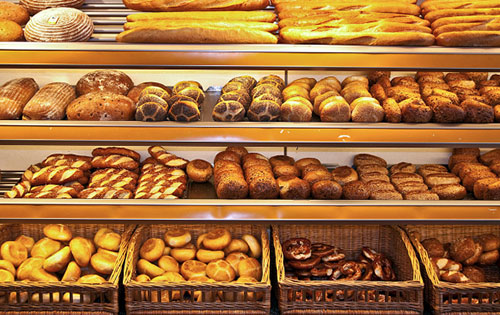

If you’re running a bakery or pizza operation, you know the silent crisis that unfolds when a batch of dough is too warm, too cold, or just… off. The waste. The inconsistent products. The energy bills that seem to rise as fast as your dough should. The culprit is often hidden in plain sight: your bread kneader machine.
Most buying guides talk about capacity, power, and speed. But the real game-changer for your bottom line and product quality isn’t just about mixing—it’s about precision control. Today, we’re diving deep into the critical, often overlooked partnership between your bread kneader machine and the art of temperature management. This isn’t just theory; it’s a practical blueprint for consistency, efficiency, and savings.
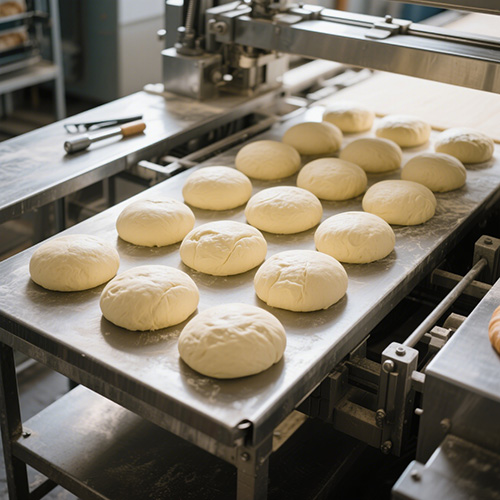
If you’re running a bakery or pizza operation, you know the silent crisis that unfolds when a batch of dough is too warm, too cold, or just… off. The waste. The inconsistent products. The energy bills that seem to rise as fast as your dough should. The culprit is often hidden in plain sight: your bread kneader machine.
Most buying guides talk about capacity, power, and speed. But the real game-changer for your bottom line and product quality isn’t just about mixing—it’s about precision control. Today, we’re diving deep into the critical, often overlooked partnership between your commercial bread kneader machine and the art of temperature management. This isn’t just theory; it’s a practical blueprint for consistency, efficiency, and savings.
This is where the evolution of the bread kneader machine shines. The latest models are designed not just as mixers, but as temperature management systems. Here’s what to look for:
Consider a mid-sized bakery, “Artisan Crust,” producing 200kg of various doughs daily. They used a conventional spiral dough kneading machine. Their head baker spent the first hour each morning calculating water temperatures with complex formulas, yet midday batches (when the kitchen was warm) were consistently problematic—over-fermenting, leading to flat sourdough and dense brioche.
They upgraded to a modern bread kneader machine with a refrigerated jacket and digital temperature probe. The process changed entirely:
The results after one quarter:
When evaluating a heavy duty bread kneader machine, look beyond the brochure’s headline specs. Dig into the details that affect thermal management.
| Feature | Conventional Kneader | Advanced Temperature-Managed Kneader | Impact on Your Operation |
|---|---|---|---|
| Heat Dissipation | Relies on ambient air. Limited. | Actively managed via jacketed bowl & efficient design. | Precision: Achieves ±0.5°C of target dough temp. Consistency: Batch-to-batch uniformity. |
| Mixing Time | Often longer to achieve development. | Optimized for faster, efficient development. | Efficiency: Less time mixing = less heat input & higher daily capacity. |
| Energy Draw | High, constant power draw during mix. | Variable, intelligent power use based on load. | Savings: Can reduce mixing cycle energy use by 20-30%. |
| Control System | Basic timers and speed switches. | Digital interface with recipe memory & temperature monitoring. | Simplicity: Removes baker’s calculation burden. Reduces human error. |
| Long-Term Cost | Lower upfront, higher hidden costs (waste, energy, inconsistency). | Higher upfront investment, rapid ROI through savings. | ROI: Payback often achieved in 12-24 months via waste and energy reduction. |
Buying the right machine is step one. Integrating it into a temperature-aware process is where you lock in the gains.
DDT = (Flour Temp + Room Temp + Friction Factor + Water Temp) / Number of Factors. The “Friction Factor” is unique to your machine—your supplier should help determine it.Investing in a bread kneader machine built for temperature control doesn’t just fix your mixing stage. It creates a positive cascade:
In the competitive world of food production, consistency is profitability. Your bread kneader machine is the heart of your dough operation; choosing one that masters the science of temperature is the single most impactful decision you can make for quality and efficiency. It’s not an expense—it’s a strategic tool that pays for itself by turning your most variable process into your most reliable asset. Stop battling the elements and start controlling them with precision engineering designed for the modern baker.
My kitchen has no cooling system. Can a jacketed bowl kneader still help?
Absolutely. While ideal with a chiller, the jacketed bowl itself is a massive heat sink, absorbing friction heat more effectively than a single-walled bowl. You can also circulate tap water (which is often cooler than dough temp) through your dough kneader machine to provide significant cooling. It dramatically improves stability over a non-jacketed machine in any environment.
Isn’t this technology only for huge industrial bakeries?
Not anymore. This technology has trickled down to mid-range and even robust smaller capacity bread kneader machines. For any operation producing multiple batches daily or working with sensitive doughs (like high-fat brioche or sourdough), the ROI on waste reduction alone makes it a serious consideration.
How do I calculate the Friction Factor for my current or new machine?
Run a test mix with water only in your bread kneader machine. Record the precise starting temperature of the water and the ending temperature after a standard mixing time at your typical speed. The temperature increase is your machine’s approximate friction factor for that specific dough consistency. Your equipment provider should assist with this critical benchmarking.
Does better temperature control affect hygiene and cleaning?
Yes, positively. Consistent, cooler dough temperatures from your bread kneader machine can help inhibit the early onset of unwanted bacterial growth. Furthermore, high-quality machines with temperature management features are typically built with superior, easy-clean surfaces and designs to meet stringent hygiene standards.