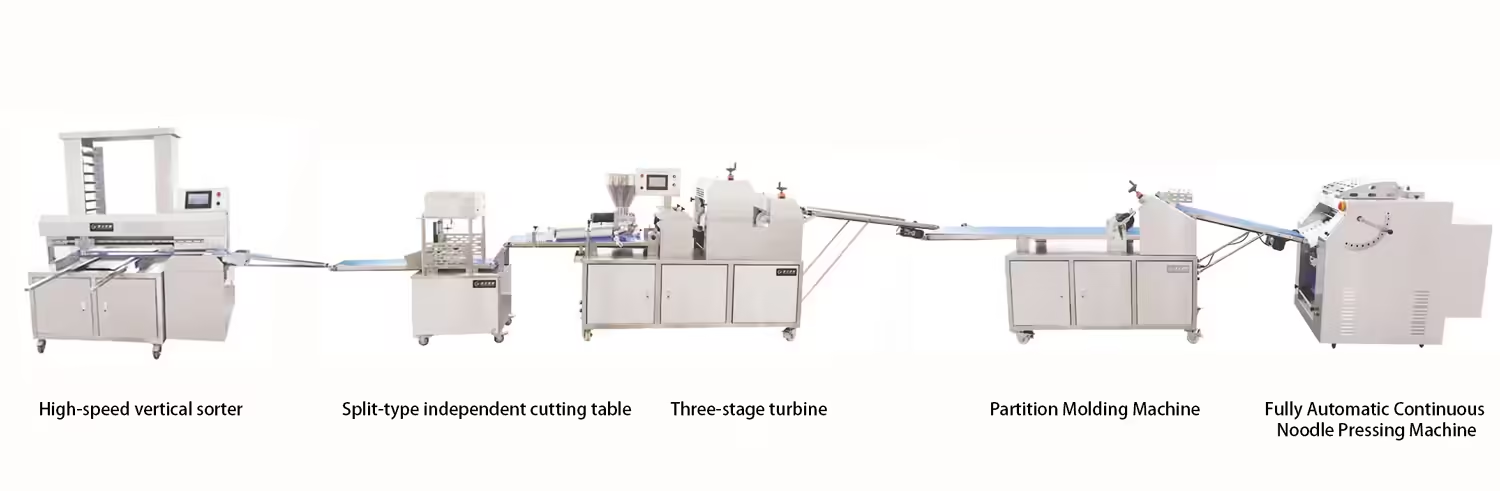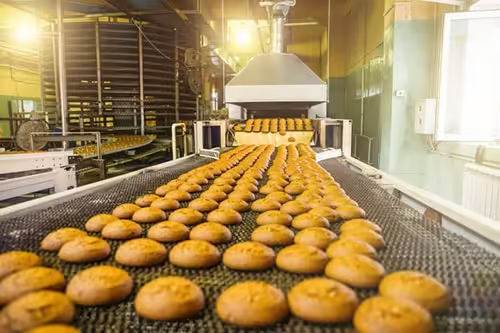

A bar bread production line is an automated system designed to produce uniform bar-shaped bread efficiently. Bakeries adopt these lines to enhance production capacity while maintaining consistent product quality. By automating multiple steps such as mixing, kneading, proofing, molding, and baking, bakeries can meet high-volume demands without compromising on consistency.
Modern bakeries face challenges such as labor shortages, rising operational costs, and increasing demand for high-quality bread. The bar bread production line addresses these issues by integrating automation with precision controls. According to industry reports, automated bakery lines can increase output by 30–50% compared to traditional manual methods while maintaining consistent product quality.

The first step in a bar bread production line involves combining flour, water, yeast, and other ingredients. Large, high-efficiency kneaders ensure the dough reaches ideal uniformity and elasticity. A well-mixed dough is critical for ensuring proper fermentation, texture, and shelf life of the bread. Many commercial lines now use high-torque motors and reinforced mixing arms to handle large volumes with minimal energy consumption.
After mixing, the dough undergoes fermentation and proofing in controlled environments. Maintaining precise temperature and humidity levels ensures uniform expansion of dough, preventing irregular texture or collapsed loaves. Advanced systems use sensors to monitor humidity, temperature, and proofing time in real-time, adjusting conditions automatically to optimize dough quality.
Once proofed, dough is portioned and shaped into bars. Automated molding units guarantee uniform size and weight, essential for consistent baking and packaging. Modern production lines often feature adjustable molds, allowing bakeries to produce different sizes or types of bar bread without changing equipment.
After shaping, dough moves into automated ovens where baking parameters like temperature, time, and airflow are carefully controlled. Uniform baking ensures consistent crust color, internal texture, and moisture content. Following baking, a controlled cooling tunnel gradually reduces bread temperature to prevent condensation and preserve freshness.
A typical production workflow includes:
This step-by-step automation ensures that even bakeries producing thousands of units per day maintain consistent quality and reduce human error.
Automated lines can operate continuously for extended periods, increasing output without sacrificing quality. Data shows that bakeries adopting automated systems can improve production capacity by up to 50%, depending on line size and speed.
By automating repetitive processes, bakeries reduce labor requirements, freeing staff for value-added tasks such as quality inspection and innovation.
Integrated sensors, PLC systems, and automation ensure each loaf meets precise specifications for size, weight, and texture. Real-time monitoring reduces waste from under- or over-proofed dough and minimizes rework.
Modern bar bread production lines support multiple bread shapes and sizes. Adjustable molds and programmable logic allow bakeries to quickly switch production for seasonal products or special orders.
| Feature | Manual Line | Automated Line |
|---|---|---|
| Production Capacity | Low (50–200 units/hr) | High (500–2000 units/hr) |
| Labor Requirement | High (6–10 operators) | Low (1–2 operators) |
| Consistency | Variable | Uniform |
| Maintenance | Simple but frequent | Advanced, less frequent |
| Initial Cost | Lower | Higher |
| Product Variety | Limited | High (adjustable molds) |
| Quality Monitoring | Manual | Real-time sensors |
This comparison highlights why bakeries increasingly adopt automated lines for medium-to-large scale operations. Even smaller bakeries can benefit from semi-automated configurations to balance cost and efficiency.
When choosing a bar bread production line, consider:
| Unit | Function | Key Features |
|---|---|---|
| Mixer & Kneader | Dough preparation | High torque, variable speed |
| Proofing Cabinet | Fermentation | Temperature & humidity control |
| Molding & Cutting Unit | Shaping and portioning | Adjustable molds |
| Baking Oven | Baking | Even heat distribution |
| Cooling Conveyor | Post-bake cooling | Controlled airflow |
| Packaging Station | Final packaging | Optional automated wrapper |
A mid-sized bakery adopted a fully automated bar bread production line and reported the following after six months:
Another bakery leveraged adjustable molds to produce seasonal specialty bread, allowing them to respond quickly to market demand and increase sales.
Investing in a bar bread production line can revolutionize bakery operations. By automating key steps, bakeries achieve higher output, consistent product quality, and lower labor costs. Choosing the right configuration ensures long-term efficiency and profitability.
Need help selecting the ideal bar bread production line for your bakery? Contact Chengwo Food Machinery today for a personalized consultation and tailored solutions. Don’t wait—optimize your bakery production now and stay ahead in the competitive market!
What is a bar bread production line and how does it work?
It automates the entire process from mixing, kneading, proofing, molding, baking, to cooling and packaging, ensuring uniform quality.
What are the advantages of using a bar bread production line?
Efficiency, consistency, labor reduction, and flexibility in product variety.
How do I choose the right bar bread production line for my bakery?
Consider production volume, automation level, space, budget, and desired product variety.
Can a bar bread production line produce different types of bread?
Yes, adjustable molds and programmable settings allow multiple sizes and shapes.
What maintenance is required for a bar bread production line?
Routine cleaning, lubrication, sensor calibration, and occasional technical inspection ensure long-term performance.