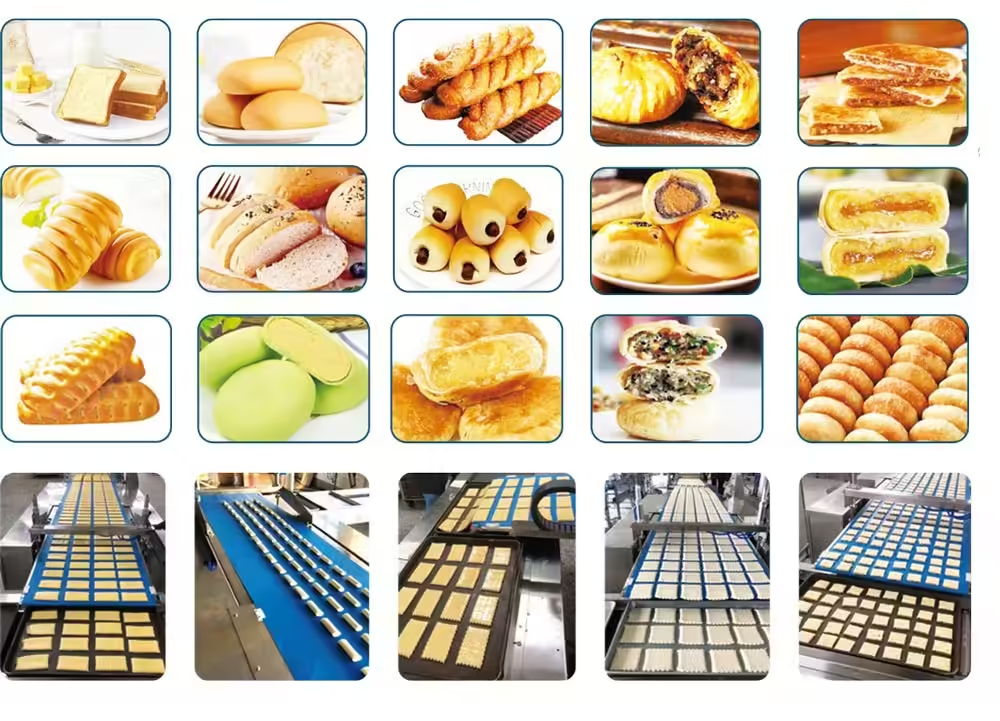

When it comes to scaling your bakery operations, efficiency, consistency, and product quality are the three pillars that can make or break your success. A well-designed bakery bread production line allows you to produce bread at higher volumes without compromising texture, flavor, or shelf life. Whether you’re running a mid-sized bakery, a large commercial kitchen, or planning to expand your production capabilities, understanding how to optimize a production line is essential.
In this article, we’ll guide you through everything you need to know about bakery bread production lines—from selecting the right equipment to layout optimization to operational best practices. We’ll also provide concrete case studies, practical examples, and a detailed comparison of different line setups to help you make informed decisions.
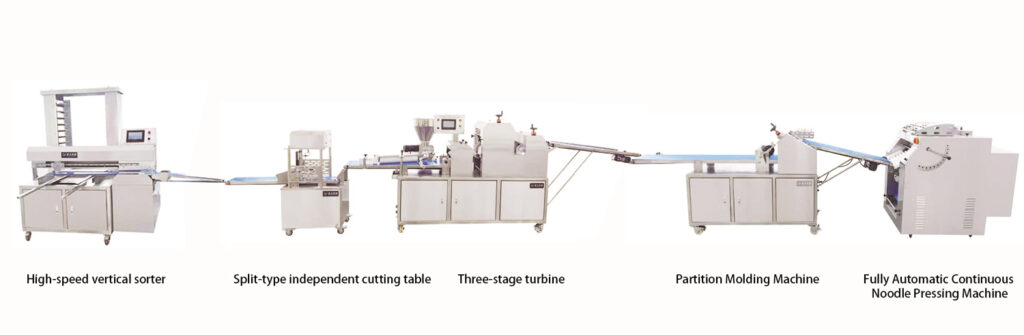
A bakery bread production line is a series of interconnected machines designed to automate the bread-making process. It generally includes dough mixing, proofing, shaping, scoring, and baking stations.
Key elements of a modern bakery bread production line:
According to industry reports, bakeries that adopt automated lines can increase production efficiency by 40–60% while reducing manual labor costs by up to 35%.
The dough mixer is the heart of your production line. Choosing the right machine ensures consistent dough quality and minimizes waste.
Considerations when selecting a dough mixer:
| Mixer Type | Capacity (kg) | Features | Ideal Use |
|---|---|---|---|
| Spiral Mixer | 50–500 | High torque, gentle mixing | Artisan bread |
| Planetary Mixer | 20–200 | Multi-purpose, kneads various doughs | Cakes & pastries |
| Twin-Shaft Mixer | 100–1000 | Fast, heavy-duty | Industrial bread |
A case study of a commercial bakery upgrading from a 50 kg planetary mixer to a 200 kg spiral mixer showed a 25% increase in output without compromising dough quality, according to internal production logs.
Proofing is a critical step that determines bread texture and flavor. Modern proofing units control temperature and humidity with precision.
Key tips for proofing optimization:
Some bakeries integrate stacked proofing cabinets to save floor space while maintaining large batch sizes. For example, a medium-scale bakery reduced proofing time by 20 minutes per batch after switching to controlled cabinet systems.
After fermentation, dough must be portioned and shaped consistently. Manual methods can lead to size variations and product inconsistency.
Benefits of automated dividing and shaping machines:
In one example, a bakery producing 1,000 loaves per day manually upgraded to an automated divider and saw a 50% reduction in labor hours, enabling staff to focus on quality control and new product innovation.
Ovens are the final stage where dough transforms into bread. Industrial ovens provide consistent heat, airflow, and steam injection for optimal crust and crumb.
Factors to consider when selecting baking ovens:
| Oven Type | Throughput (loaves/hr) | Features | Ideal Products |
|---|---|---|---|
| Deck Oven | 200–600 | Steam injection, individual deck control | Artisan bread |
| Conveyor Oven | 500–2000 | Continuous baking, consistent airflow | Sandwich & packaged bread |
| Rack Oven | 300–1500 | Multiple racks, space-efficient | Baguettes, large batches |
Studies show bakeries using conveyor ovens with controlled steam injectors achieve a 15–20% reduction in baking defects compared to traditional ovens.
Efficient workflow reduces bottlenecks, energy consumption, and labor costs.
Tips for layout optimization:
A case study from a mid-sized bakery reported a 30% reduction in internal transport time after redesigning the line layout, boosting overall production efficiency.
Regular maintenance ensures uptime, consistent product quality, and equipment longevity.
Bakeries following strict maintenance schedules experience 25% fewer production delays, according to internal equipment performance reports.
Example 1: A bakery producing 2,000 loaves per day implemented a complete bread production line, including spiral mixers, stacked proofing cabinets, and conveyor ovens. They increased output by 60% while reducing labor costs by 35%.
Example 2: A smaller bakery adopted a semi-automated line with a 100 kg dough mixer, modular proofing cabinets, and a deck oven. Production doubled in six months, enabling them to supply local stores consistently.
By carefully selecting each component, optimizing your bakery bread production line layout, and adhering to best operational practices, you can dramatically improve production efficiency, consistency, and profitability. Modern automated bakery systems are not just tools—they are the backbone of scalable, high-quality bread production.
What is the difference between a commercial and an industrial bakery bread production line?
A commercial line is suitable for small-to-medium bakeries and focuses on flexibility, while an industrial line is designed for high-volume production with fully automated systems.
How much space do I need for a bakery bread production line?
It depends on production capacity, but medium-sized lines typically require 200–500 square meters, including workflow, storage, and maintenance access.
Can I produce multiple types of bread on a single line?
Yes. Modern lines with programmable mixers, dividers, and proofing units can handle different dough types, shapes, and sizes.
What is the ROI for upgrading to an automated bakery bread production line?
Most bakeries see ROI within 2–4 years due to reduced labor costs, increased throughput, and minimized product defects.
Are there energy-efficient options for bakery bread production lines?
Yes. Many equipment suppliers offer mixers, proofers, and ovens with energy-saving motors, insulation, and digital controls to reduce operational costs.