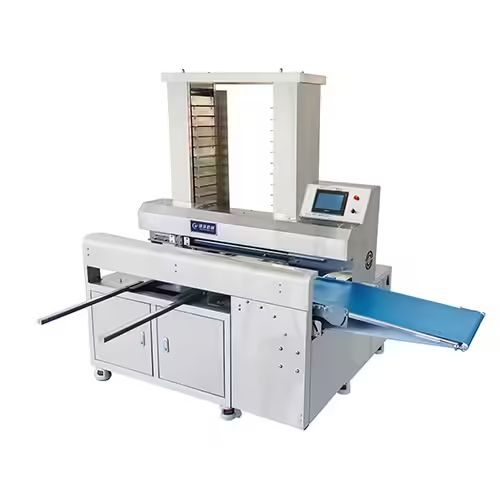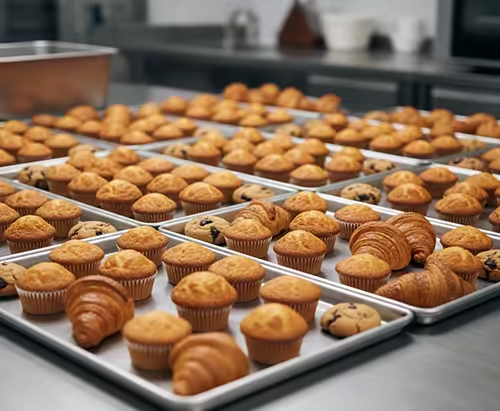

In modern food production, efficiency and precision are key to staying competitive. An automatic tray arranging machine is a vital piece of equipment that can transform your production workflow. By automating the process of arranging trays for baked goods, this machine reduces labor costs, improves speed, and ensures consistent product placement.
These machines are particularly valuable in bakeries, pastry production lines, and industrial food processing facilities where large volumes of products need to be handled. With features such as high-speed servo drives, simplified operation, and advanced sensor technology, an automatic tray arranging machine guarantees both efficiency and reliability throughout the production process.
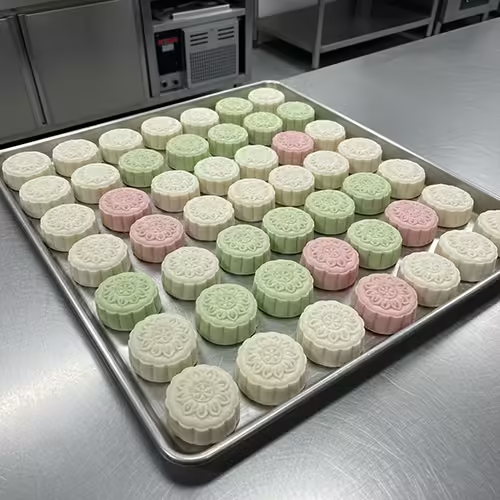
An automatic tray arranging machine is designed to organize trays in a consistent and precise manner. Unlike manual methods, which are prone to human error and slower speeds, these machines ensure trays are placed accurately every time.
Key components include:
Applications include bakeries producing bread, cakes, pastries, or other dough-based products, as well as large-scale food processing facilities where consistency and speed are critical.
Automatic tray arranging machines significantly enhance production efficiency by:
By integrating this machine into your workflow, you can focus on other critical production tasks while maintaining high output levels.
The main features that make this machine stand out include:
These features combine to deliver a reliable and adaptable solution for high-volume production environments.
Choosing the right arranging method depends on your production needs. Here’s a comparison:
| Arranging Method | Best Use Case | Advantages | Considerations |
|---|---|---|---|
| Straight Line | Standard tray arrangement | Simple, fast, easy to implement | Limited flexibility |
| Staggered | Irregular shaped products | Optimizes space, reduces collision | Slightly slower setup |
| Single Item | High-value or delicate items | Maximum accuracy, customizable | Slower speed for large batches |
This comparison helps you select the ideal arranging mode based on your product type, production volume, and required accuracy.
Automatic tray arranging machines seamlessly integrate with other equipment, such as dough mixers, oven lines, and cooling conveyors. This integration allows for:
Proper integration ensures maximum return on investment and a more efficient production line.
To keep your automatic tray arranging machine running smoothly:
Following these practices can extend the machine’s life and maintain consistent performance.
Investing in an automatic tray arranging machine provides measurable benefits:
According to industry reports, automated tray arranging systems can improve overall production efficiency by up to 40%, depending on your workflow and volume.
Bakeries and food processors have seen significant improvements by adopting automatic tray arranging machines. For example:
| Production Line | Previous Method | Machine Impact | Efficiency Gain |
|---|---|---|---|
| Pastry Bakery | Manual placement | Automatic arrangement | +35% speed, 50% labor saved |
| Bread Factory | Semi-automatic | Fully automated tray arranging | +40% throughput, consistent product quality |
| Large Food Plant | Mixed manual | Single-item mode | Reduced errors, smoother workflow |
These examples demonstrate tangible benefits for different production scales.
An automatic tray arranging machine is a game-changer for bakeries and food processing facilities looking to improve efficiency, reduce labor costs, and ensure consistent product quality. By selecting the right model and arranging method, you can optimize your production line for higher throughput and accuracy.
Need Help Choosing the Right Automatic Tray Arranging Machine? If you’re unsure which model or arrangement method best suits your production line, our experts are here to help. Contact Chengwo Food Machinery today for a personalized consultation, and discover how our solutions can enhance your workflow and ensure reliable, high-quality production. Don’t wait—get in touch now to optimize your operations and boost your bakery efficiency!
What types of trays can this machine handle?
The automatic tray arranging machine is designed to handle a wide variety of tray types, including standard metal, plastic, and silicone trays. Physical and optical sensors ensure accurate detection, even with slight variations in size or shape.
Can it work with sticky or irregular dough products?
Yes. The machine uses advanced sensor technology and high-power servo drives that prevent clogging or misplacement caused by sticky dough or irregularly shaped items. This ensures consistent tray arrangement for different products like pastries, bread, and cakes.
How do I choose the right model for my production line?
Consider your production volume, product type, and tray size. Use the comparison table above to determine the ideal arranging mode. For high-volume production, staggered or mixed modes might be ideal, while small or delicate batches may benefit from single-item placement.
What maintenance is required to keep the machine efficient?
Regular cleaning of sensors and mechanical components is essential. Daily removal of crumbs or dough fragments prevents blockages. Periodic calibration of sensors ensures accurate detection, and monitoring wear on moving parts prevents downtime.