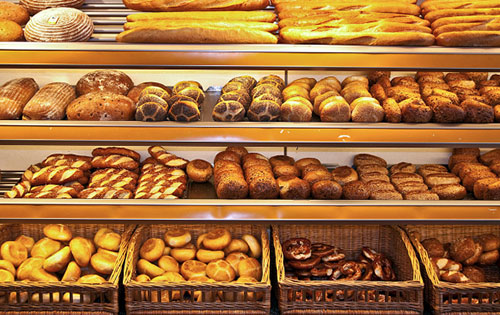

The global baking industry is undergoing a profound transformation. As labor costs rise and consumer demand for standardized quality increases, the shift toward industrial automation has moved from a luxury to a strategic necessity. For large scale food manufacturers and growing bakery chains, the integration of an automatic bread processing production line is the primary driver of sustainable growth. This technology does not just replace manual tasks; it redefines the entire logic of dough handling, fermentation, and thermal processing to ensure that every loaf meeting the shelf is identical in texture, weight, and flavor.
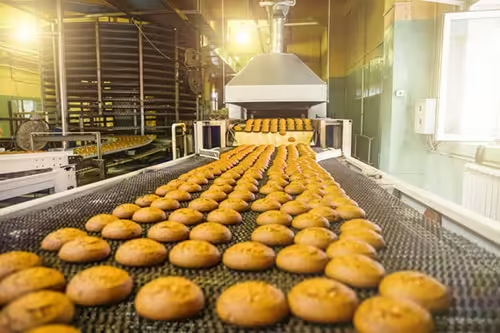
Scaling a bakery business manually often leads to a plateau where human fatigue and logistical complexity limit further growth. An automatic bread processing production line solves this by providing a continuous, high volume output that operates independently of shift fatigue. Depending on the configuration, these lines can handle capacities ranging from 500kg to over 2000kg of dough per hour.
This level of output allows your business to secure large scale contracts with supermarkets, quick service restaurants, and international distributors. When you can guarantee a specific volume of delivery every day without fail, your brand moves from being a local supplier to a reliable industrial partner.
In the food industry, consistency is the foundation of brand trust. Manual production inherently introduces variables—different bakers have different kneading strengths, and ambient kitchen temperatures can fluctuate. An automated system utilizes mechanical precision in dividing and rounding, ensuring that every dough ball is the exact same weight before it enters the proofer.
By eliminating human error in fermentation and proofing cycles, you ensure that the internal crumb structure and external crust color remain uniform across thousands of units. This level of control is essential for products destined for automated slicing and packaging lines, where even a slight variation in loaf height can lead to significant waste during the bagging process.
Labor remains the most volatile expense in food production. Implementing an automatic bread processing production line allows you to transition your workforce from physically demanding manual labor to higher value supervisory roles. Instead of ten employees focused on shaping dough, two technicians can manage the entire line via a central control interface.
According to industrial economic reports from global food processing associations, automating a mid-sized bakery can reduce direct labor costs by up to 60 percent. Beyond wages, you also reduce expenses related to workplace injuries, staff turnover, and the intensive training required for artisanal baking skills.
To understand the financial and technical impact of automation, it is helpful to analyze the performance metrics of a standard industrial setup.
| Performance Metric | Manual/Semi-Automatic Setup | Fully Automatic Production Line |
| Hourly Output (Loaves) | 100 – 300 Units | 1,000 – 3,500 Units |
| Staff Required | 8 – 12 Operators | 2 – 3 Operators |
| Weight Accuracy | +/- 5% Variance | +/- 1% Variance |
| Waste Rate | 3 – 5% due to human error | < 0.5% through precision sensors |
| Hygiene Level | High Risk (Human Contact) | Minimal Risk (Touchless System) |
| Energy Efficiency | High (Disjointed Equipment) | Optimized (Integrated Heat Recovery) |
A turnkey solution is designed as a seamless ecosystem where every module communicates with the next. The process begins with integrated high speed mixing and low stress dividing systems that protect the delicate gas cells in the dough. Following the shaping stage, the dough moves through advanced proving, baking, and cooling modules.
Modular design is a significant advantage for modern factories. It allows you to add or swap components—such as adding a topping station for seeded breads or a specialized slicing module—without redesigning the entire facility. This flexibility ensures that your investment remains relevant as market trends evolve.
Modern automation has moved beyond simple conveyor belts. Today, an automatic bread processing production line utilizes precision humidity and temperature sensors within automated proofers to simulate the ideal microclimate for yeast activity. This ensures that fermentation is neither rushed nor sluggish, regardless of external weather conditions.
Low stress dough sheeting technology is another breakthrough. It allows industrial lines to produce breads with an open, artisan style crumb that was previously only achievable by hand. By mimicking the gentle touch of a baker’s hands through specialized rollers, the machine preserves the integrity of the dough, resulting in a superior mouthfeel and longer shelf life.
For any business looking to compete on a global stage, hygiene compliance is a non-negotiable entry requirement. Professional production lines are constructed using SUS304 stainless steel and feature easy clean designs that eliminate “dead zones” where bacteria could grow.
Adhering to international protocols such as CE, FDA, and ISO is vital for passing third party audits and securing export licenses. Automated systems reduce human contact with the raw product to near zero, significantly lowering the risk of cross contamination and ensuring that your facility meets the highest global safety standards.
Investing in an industrial bread line is a significant capital expenditure, but the return on investment is often realized much faster than anticipated. When calculating the break even point, you must consider the reduction in ingredient waste. Precision dosing and cutting mean you get more loaves out of every ton of flour compared to manual methods.
Energy efficiency also plays a role in the total cost of ownership. Modern ovens integrated into these lines often feature heat recovery systems that repurpose exhaust air to preheat the proofer. Based on technical audits in the manufacturing sector, these integrated efficiencies can lower utility costs by 15 to 20 percent compared to using standalone, disjointed equipment.
Every market has its own preferences, whether it is the specific length of a baguette, the softness of a hamburger bun, or the crumb density of a sandwich toast. A professional manufacturer provides customization to adapt the automatic bread processing production line to these local requirements.
Engineering a line to fit your specific facility layout is also part of the service. Whether you have a narrow, long space or a wide, square factory floor, modular components can be configured in L-shape, U-shape, or linear paths to maximize your available square footage.
The relationship with a manufacturer should not end at the point of sale. Global commissioning involves sending engineers to your site to calibrate the sensors, train your local team, and ensure the first batch of bread meets your exact specifications.
Remote monitoring technology now allows manufacturers to troubleshoot software issues or adjust timing cycles from across the world, reducing the need for expensive on-site visits. Ensuring the availability of spare parts is the final pillar of support, guaranteeing that your line maintains its 24/7 operation and your supply chain remains uninterrupted.
The transition to an automatic bread processing production line is the most effective way to future proof your baking business. By embracing mechanical precision, labor efficiency, and technological innovation, you gain a competitive edge that manual bakeries cannot match. Automation is the bridge between traditional recipes and global market dominance.
What is the typical hourly output of an automatic bread processing production line?
A standard industrial automatic bread processing production line can produce between 1,000 and 3,500 loaves per hour, depending on the loaf weight and the configuration of the proofing and baking modules. This high-volume capacity allows factories to meet large-scale retail contracts that manual bakeries cannot fulfill.
Can one automatic bread processing production line handle multiple types of bread?
Yes, modern lines are designed with modularity. By adjusting the settings on the PLC control panel and changing specific forming molds, a single line can transition between producing toast, baguettes, or hamburger buns. This versatility is essential for businesses looking to diversify their product range without investing in entirely separate facilities.
How many operators are required to run a fully automatic bread processing production line?
A major benefit of an automatic bread processing production line is labor efficiency. Typically, only 2 to 3 skilled technicians are needed to oversee the entire process—from dough mixing to final cooling—as the system manages the dividing, rounding, and proofing automatically through precision sensors.
Does an automatic bread processing production line ensure better food safety?
Absolutely. By minimizing human contact with the raw dough, an automatic bread processing production line significantly reduces the risk of cross-contamination. Furthermore, most industrial lines are constructed from SUS304 stainless steel, which is non-porous and easy to sanitize, helping your facility comply with international health standards like CE and FDA.
If you are unsure about which automatic bread processing production line is best for your factory or upcoming project, our experts are here to help. Contact us today for a personalized consultation, and ensure your production facility is efficient, compliant, and built for high-capacity growth. Don’t wait until competitors outpace your output—get in touch now to optimize your facility and protect your market share!