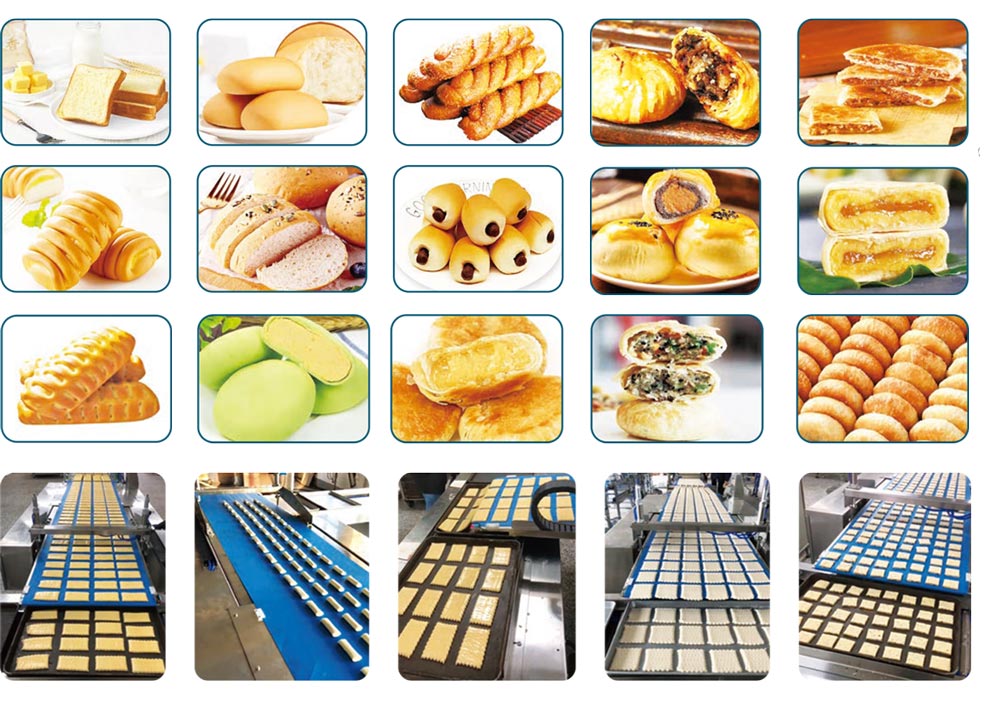

Running a bakery or food production facility efficiently requires the right equipment. An artisan bread production line is designed to automate and streamline the process of producing high-quality bread, from mixing dough to baking the final product. This type of production line ensures consistent dough texture, proper fermentation, uniform shaping, and precise baking—all crucial for maintaining quality and meeting production targets.
According to data from Bakery Technology Insights, automated artisan bread production lines can increase output by up to 50% while reducing labor costs and minimizing product inconsistencies. By investing in a modern production line, bakeries can scale operations, reduce waste, and maintain high standards for artisan bread.
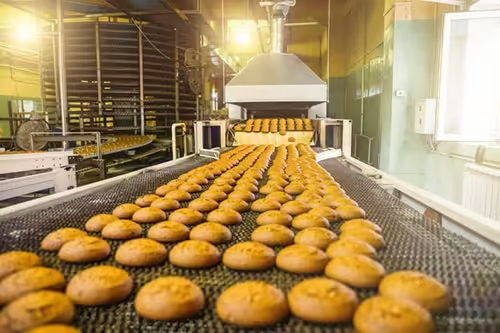
The mixing stage is the foundation of any artisan bread production line. Spiral mixers are ideal for high-gluten dough, producing consistent kneading without overheating the dough. Planetary mixers are versatile, suitable for lighter doughs, pastries, and specialty breads. Industrial mixers handle larger volumes efficiently, making them ideal for bakeries with high output requirements.
Proofing cabinets and conveyor proofers control temperature and humidity precisely, allowing dough to rise consistently. Automated proofing reduces human error and ensures uniform texture and flavor in every batch. Proper fermentation is particularly important for sourdough and high-hydration breads, where dough development affects crumb structure and taste.
Dividers, rounders, and shaping machines are essential for consistent loaf size and shape. Whether producing baguettes, boules, or specialty bread, these machines ensure uniformity across production batches. Consistency in shape and weight improves packaging efficiency and customer satisfaction.
Deck ovens, conveyor ovens, and hybrid baking systems allow bakeries to bake large volumes efficiently. Cooling tunnels prevent overcooking and maintain bread quality before packaging. Automation in the baking stage ensures that loaves maintain uniform color, crust, and internal texture.
When choosing equipment, consider these factors:
Research from Food Processing Equipment Reports indicates that energy-efficient artisan bread production lines can reduce operational costs by up to 20% annually, making this an important factor when selecting equipment.
Before purchasing a production line, evaluate your specific requirements:
Proper assessment ensures you choose a production line that maximizes efficiency and ROI while reducing bottlenecks.
Adopting automated or semi-automated equipment provides multiple benefits:
| Factor | Automated Artisan Bread Production Line | Manual Production |
|---|---|---|
| Consistency | High, repeatable | Variable |
| Labor Requirement | Low | High |
| Production Speed | Fast | Slow |
| Scalability | Easily scalable | Limited |
| Dough Quality | Uniform | Depends on skill |
While artisanal techniques are important for flavor and presentation, automated production lines ensure high-volume output without compromising consistency.
To protect your investment and maintain efficiency, follow these maintenance guidelines:
Regular preventive maintenance helps reduce downtime, extend the lifespan of your production line, and maintain consistent bread quality.
Investing in a high-quality artisan bread production line requires upfront capital but delivers long-term savings. Benefits include:
Industry studies suggest that bakeries typically see a return on investment within 12–24 months when upgrading to a modern production line.
Selecting the right artisan bread production line is critical for efficiency, consistency, and profitability. By evaluating production needs, understanding equipment types, and considering capacity, automation, and maintenance, you can choose a solution that supports growth and delivers high-quality artisan bread at scale.
What is the best artisan bread production line for small bakeries?
Compact and semi-automatic lines are ideal for small bakeries, offering efficiency without taking up excessive space.
Can the production line handle sourdough or specialty breads?
Yes, modern lines are designed to accommodate high-hydration dough and specialty recipes while maintaining consistency.
How many loaves per hour can a production line produce?
Production capacity varies by line size. Small lines produce several hundred loaves per hour, while industrial lines can produce thousands.
What maintenance is required for long-term use?
Daily cleaning, periodic lubrication, and timely replacement of worn parts are essential to ensure reliable operation.
How do I choose between semi-automatic and fully automatic equipment?
Consider your production volume, labor availability, and budget. Fully automatic lines reduce manual intervention but have higher initial costs.
If you’re unsure which artisan bread production line is best for your bakery, our experts are ready to help. Contact us today for a personalized consultation and explore solutions to improve efficiency, consistency, and output. Don’t wait to optimize your production—get in touch now and take your bakery to the next level.