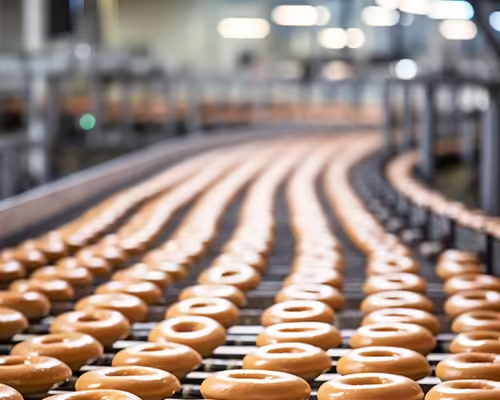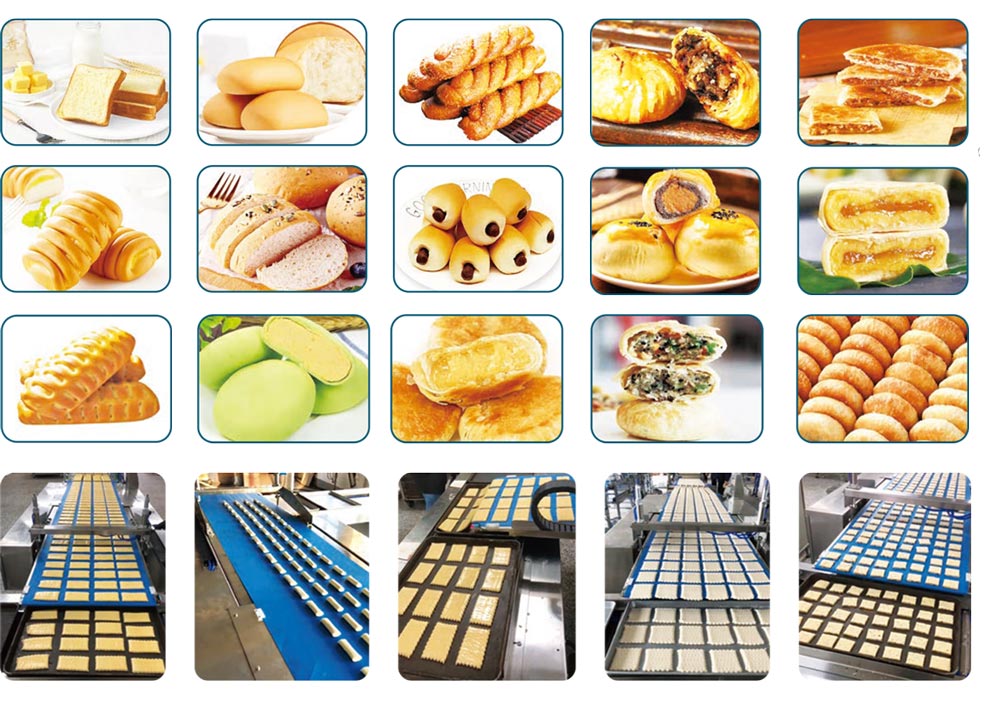

The aroma of freshly baked croissants wafting from a bakery is more than just an inviting scent it represents a sophisticated production process that has evolved from artisan handcrafting to highly automated manufacturing systems. Whether you operate a small neighborhood bakery or manage large-scale industrial baking facilities, understanding croissant bread production line technology has become essential for staying competitive in today’s dynamic bakery market.
Consumer demand for high-quality croissants continues growing worldwide, driven by breakfast culture expansion, increasing preference for premium baked goods, and the globalization of French-inspired pastries. According to bakery industry analysis, the global croissant market has experienced consistent annual growth of approximately 5.7% over the past five years, with particularly strong performance in emerging markets where Western baked goods are gaining popularity.
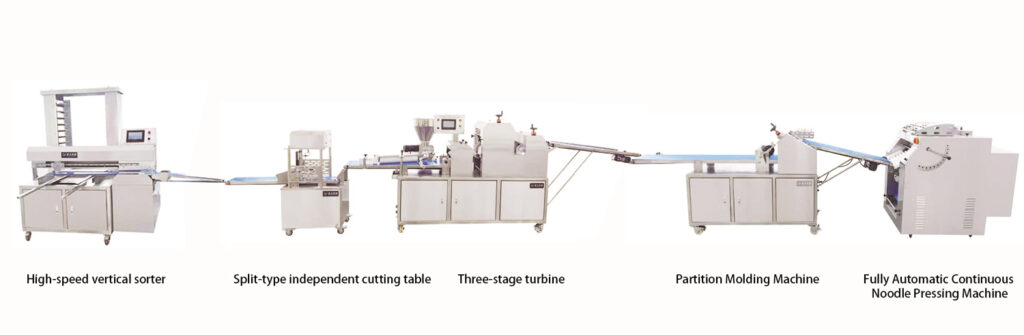
A croissant bread production line represents an integrated system of specialized equipment designed to automate the entire croissant manufacturing process from dough mixing through packaging. These lines vary significantly in complexity and capacity, ranging from simple semi-automatic systems for small bakeries to sophisticated fully automated lines producing thousands of pieces per hour for industrial operations.
The fundamental principle behind croissant bread production lines in the lamination process creating characteristic flaky layers through alternating layers of dough and butter. This technique, perfected by French bakers in the 19th century, requires precise control of temperature, pressure, and timing to achieve the desired layer structure and final product quality. Modern production lines replicate and enhance this traditional process through mechanical precision and automation.
Every croissant bread production line comprises several essential stations that work in coordinated sequence. The dough mixing system serves as the starting point, where flour, water, yeast, sugar, and other ingredients are combined into homogeneous dough with the proper gluten development. Advanced mixing systems incorporate temperature control features, ensuring dough remains at optimal temperature throughout the mixing process typically between 18-22 degrees Celsius for croissant production.
Following mixing, the dough enters a resting stage allowing gluten relaxation and yeast activity to begin. Modern lines may feature automated dough resting chambers with controlled temperature and humidity, providing consistent conditions regardless of external environment. This consistency proves crucial for maintaining product quality across varying production shifts and seasonal conditions.
The laminating station represents the heart of any croissant bread production line. Here, dough is flattened and layered with butter through multiple rolling and folding operations. Industrial laminating machines typically feature multiple roller sets progressing from coarse initial reduction to fine final sheeting. High-end systems incorporate up to 16 rollers arranged in series, each performing incremental thickness reduction while preserving butter layer integrity.
Cutting and rolling stations transform laminated dough sheets into individual croissant shapes. Advanced cutting systems use triangular dies that cut precise shapes while preserving laminated structure. Rolling mechanisms then roll each triangle starting from the base toward the tip, creating the characteristic crescent shape. Modern rolling stations employ variable speed and pressure controls to accommodate different dough characteristics and croissant styles.
Understanding the complete production cycle helps operators optimize each stage for maximum quality and efficiency. The process begins with dough preparation where ingredients are carefully weighed and mixed according to precise recipes. Mixing time and speed significantly impact final product characteristics, with under-mixing producing weak gluten structure and over-mixing creating excessive toughness. According to baking technology research, optimal mixing time typically ranges from 8-15 minutes depending on mixer type and batch size.
After mixing, dough undergoes a resting period typically lasting 30-60 minutes. This relaxation phase allows gluten networks to reorganize and yeast to begin fermentation. Temperature control during resting proves critical with ideal conditions maintained between 18-20 degrees Celsius. Industrial lines employ automated resting tunnels that provide consistent conditions, removing variability from manual handling and environmental fluctuations.
The lamination process begins once dough has properly rested. The dough sheet is flattened and covered with butter, then folded multiple times to create alternating layers. Traditional croissant bread production line employs 27 layers achieved through three single folds, while premium croissants may feature 81 layers through three double folds. The number of layers directly influences final product texture with more layers producing finer, more delicate crumb structure.
Following lamination, the dough sheet is cut into triangular pieces. The angle and dimensions of these triangles determine final croissant size and shape. Standard croissant triangles typically feature a base width between 8-12 centimeters and a height of 20-30 centimeters, though variations exist for different regional styles and market preferences.
Rolling the triangles into crescent shapes requires careful pressure control. Excessive pressure can damage laminated layers, reducing flakiness, while insufficient pressure may produce loose, poorly formed croissants. Modern rolling machines apply graduated pressure that increases gradually from base to tip, ensuring proper formation without layer damage.
Croissant bread production lines fall into three main categories, each suited to different operational scales and business models. Manual production relies primarily on human labor with minimal mechanical assistance. This traditional approach preserves artisan characteristics but limits production capacity and consistency. Small specialty bakeries often prefer manual production for its flexibility and ability to produce small batches with unique characteristics.
Semi-automatic systems introduce mechanization for specific operations while maintaining human oversight and intervention. These systems typically automate labor-intensive tasks like laminating and cutting while relying on operators for loading, unloading, and quality inspection. Semi-automatic lines strike a balance between automation cost and production efficiency, making them popular choices for growing bakeries increasing production capacity without full automation investment.
Fully automatic lines represent the pinnacle of croissant bread production line. These integrated systems handle the entire production process with minimal human intervention, from raw ingredient input to finished product output. Operators primarily monitor performance, make quality adjustments, and perform maintenance rather than directly handle products. According to industry equipment analysis, fully automatic lines can reduce labor requirements by 70-85% compared to manual production while increasing output capacity by 300-500%.
Production capacity represents one of the most critical considerations when selecting croissant bread production line. Capacity requirements vary dramatically based on business scale, market demand, and operational strategy. Understanding capacity options helps match equipment investment to actual production needs, avoiding both under-capacity constraints and over-investment in unnecessary capacity.
Small bakery production lines typically handle between 500-2,000 pieces per hour, making them suitable for neighborhood bakeries, cafes, and specialty pastry shops. These compact systems emphasize flexibility over maximum throughput, allowing easy recipe changes and product variety. Despite their smaller size, modern small-scale lines incorporate sophisticated features like programmable logic controllers and automated recipe management that previously were only available in larger industrial systems.
Medium capacity lines bridge the gap between small bakery operations and large industrial production. Operating in the 2,000-8,000 pieces per hour range, these systems serve growing regional bakeries, hotel chains, and central kitchen facilities supplying multiple outlets. Medium capacity lines often feature modular designs that allow capacity expansion as business grows, providing flexibility for evolving production requirements.
Industrial croissant bread production lines represent the highest production category, capable of producing 8,000-20,000+ pieces per hour. These massive systems typically incorporate multiple parallel production lanes, extensive automation, and sophisticated quality control systems. According to food manufacturing industry reports, industrial lines achieve labor productivity improvements of 80-90% compared to manual production while maintaining product consistency within tight tolerance ranges.
Multiple factors influence actual production speed beyond theoretical equipment capacity. Dough characteristics significantly impact achievable throughput with stiffer doughs requiring slower processing speeds to prevent damage to laminated structure. Conversely, overly soft doughs may require increased resting times and reduced throughput to maintain proper handling characteristics. Experienced operators adjust processing parameters based on daily environmental conditions and ingredient variations to maintain optimal production efficiency.
Proofing time represents another critical factor affecting overall production speed. Croissants typically require 60-120 minutes of proofing depending on size, recipe, and environmental conditions. Traditional proofing methods using batch proofers create production bottlenecks as operators must wait for complete proofing before baking. Continuous proofing systems address this limitation by maintaining products at ideal proofing conditions while they move through temperature and humidity controlled tunnels, enabling seamless integration with downstream baking operations.
Baking time also constrains production capacity. Standard croissants typically require 15-20 minutes baking time at temperatures between 180-200 degrees Celsius. High-speed tunnel ovens reduce baking time through optimized heat transfer and precise temperature control, while traditional deck ovens may require longer baking times to achieve comparable results. Production planning must account for baking capacity when designing overall system throughput.
Determining appropriate production capacity requires careful analysis of current demand, growth projections, and operational considerations. Production planning should begin with detailed demand analysis including daily, weekly, and seasonal demand patterns. According to bakery operations research, demand fluctuations of 50-100% between peak and off-peak periods are common for croissant products, particularly those tied to breakfast and snacking occasions.
Growth projections also influence capacity selection. Investing in equipment that meets only current needs may necessitate premature replacement as demand grows. Conversely, over-investing in excessive capacity ties up capital that could be deployed elsewhere in the business. Many operators select equipment with 20-30% additional capacity beyond current requirements, providing growth headroom without excessive over-provisioning.
Operational considerations also affect capacity requirements. Production strategies emphasizing variety and frequent recipe changes may require additional capacity to account for changeover time between different products. Similarly, quality-focused operations may allocate additional time for inspection and adjustment, reducing effective production capacity compared to theoretical maximum throughput.
Investment in croissant bread production line represents significant capital commitment requiring careful financial analysis and strategic planning. Understanding total ownership costs and return potential helps ensure investment decisions align with business objectives and financial constraints. While specific pricing varies based on capacity, automation level, and regional market conditions, understanding cost structure and return mechanisms enables informed investment decisions.
Return on investment for croissant bread production line typically materializes through multiple mechanisms including labor savings, increased production capacity, improved product consistency, and waste reduction. Labor savings often represent the most significant return mechanism, with automated systems reducing labor requirements by 40-85% depending on automation level and production scale. According to food industry cost analysis, labor typically represents 25-35% of total croissant bread production line costs in manual operations, making labor reduction a powerful return driver.
Increased production capacity generates additional revenue opportunities by enabling market expansion and product line growth. Automation capabilities often enable production volume increases of 200-500% without proportional labor increases, significantly improving production efficiency and profit margins. These capacity increases enable operators to serve larger markets, pursue additional sales channels, and capture market share from competitors with less efficient operations.
Waste reduction also contributes significantly to return on investment. Manual production processes typically generate waste rates of 5-10% due to inconsistent processing, handling damage, and quality rejects. Automated systems with precise control and consistent processing typically reduce waste to 2-4%, representing substantial material cost savings. For high-value ingredients like premium butter and specialized flour, these savings accumulate rapidly, contributing significantly to investment return.
Beyond initial capital investment, understanding ongoing operating costs helps calculate total ownership cost and actual production economics. Energy consumption represents a significant operating cost, with mixing, laminating, and baking operations requiring substantial electrical power. Energy consumption varies based on equipment efficiency, production volume, and operating patterns, with modern energy-efficient designs reducing energy requirements by 20-30% compared to older generation equipment.
Maintenance and spare parts represent another ongoing cost category. Preventive maintenance programs typically cost 2-3% of equipment value annually when properly implemented. These costs include routine inspections, lubrication, part replacement, and periodic professional servicing. While maintenance costs represent ongoing expense, they prove essential for maintaining reliability and preventing costly unplanned downtime that disrupts production schedules.
Ingredient optimization also affects operating economics. Automated systems with precise control enable reduced ingredient usage while maintaining product quality. Precise portioning reduces giveaway while consistent processing reduces quality-related rejects. These efficiency improvements typically reduce ingredient costs by 3-5% compared to manual operations, contributing to overall operational efficiency.
Selecting between automatic and manual production approaches represents a critical decision affecting operational capabilities, financial requirements, and long-term business potential. Understanding relative advantages and limitations of each approach helps match equipment selection to specific business circumstances and strategic objectives.
Production speed represents the most visible difference between automatic and manual approaches. Manual production typically achieves throughput of 50-200 pieces per hour depending on operator skill and product complexity. Semi-automatic systems increase throughput to 500-2,000 pieces per hour while fully automatic systems achieve 2,000-20,000+ pieces per hour depending on configuration. This dramatic difference affects market reach, revenue potential, and competitive positioning.
Labor requirements also differ substantially. Manual production requires 4-8 skilled operators per shift depending on production volume and process steps. Semi-automatic systems reduce requirements to 2-4 operators while fully automatic lines require only 1-2 operators primarily for monitoring and oversight. These labor differences affect not only direct labor costs but also recruitment challenges, training requirements, and operational complexity.
Product consistency varies significantly between approaches. Manual production inevitably introduces variability due to human factors like fatigue, skill variation, and environmental conditions. Automated systems with precise control and consistent processing produce highly consistent product quality within tight tolerance ranges. According to quality control studies, automated production typically reduces quality variation by 60-80% compared to manual methods.
Consistent product quality represents a primary advantage of automatic systems. Computer-controlled processing ensures consistent mixing time, laminating pressure, cutting precision, and baking conditions across production runs. This consistency enables brand building through reliable product quality and supports customer retention through dependable taste and texture. Quality consistency also supports expansion into quality-sensitive markets like premium retail and food service partnerships.
Reduced labor dependency provides operational resilience against labor market challenges. Automated systems require fewer specialized skills, reducing recruitment difficulty and training time. This reduced labor dependency also provides flexibility in shift scheduling and operations scaling, enabling rapid response to demand changes without workforce constraints. Labor cost savings also improve profit margins, particularly in high-wage markets where labor represents substantial production cost.
Higher throughput capacity enables market expansion and revenue growth. Automated systems can serve larger geographic areas, supply additional sales channels, and pursue bulk contract opportunities that would be impossible with manual production limitations. This capacity flexibility provides strategic options for business growth and diversification, supporting long-term business development and market expansion.
Integrated quality control represents another significant advantage. Modern automated lines incorporate monitoring systems that track critical parameters like dough temperature, laminating thickness, and baking characteristics in real time. These systems enable proactive quality management, rapid issue detection, and continuous process improvement. Quality data also supports regulatory compliance and documentation requirements important for many market channels.
Small-scale operations with limited daily production requirements often find manual or semi-automatic approaches more appropriate. When production volume remains below 1,000 pieces daily, the capital investment required for full automation may not justify return potential. Manual approaches also preserve flexibility for producing small batches with unique characteristics valued in artisan markets.
Budget constraints frequently influence equipment selection decisions. When capital availability limits automation investment, semi-automatic systems provide intermediate automation benefits with reduced capital commitment. These systems enable productivity improvements while maintaining manageable investment levels, serving as stepping stones toward eventual full automation as business grows and cash flow permits.
Artisan and specialty production often emphasizes characteristics that automated systems struggle to replicate. Hand-formed shapes, visible artisan characteristics, and unique textures associated with traditional methods may command premium prices in certain market segments. These quality differentials may offset higher production costs associated with manual approaches, making them economically viable despite lower efficiency.
Market testing and product development benefit from flexible manual approaches that enable rapid recipe experimentation without equipment reconfiguration costs. New product development requires exploration of various formulations, shapes, and processing parameters before committing to large-scale production. Manual approaches provide this flexibility, supporting innovation and market exploration without substantial automation investment.
Understanding individual equipment components helps operators optimize system performance, troubleshoot issues, and make informed upgrade decisions. Each component plays a specific role in the overall production process, and proper selection and integration determines system capabilities and final product quality.
Mixing systems provide the foundation for consistent croissant bread production line. Spiral mixers represent traditional choices for croissant dough, offering gentle mixing action that develops gluten without excessive heat buildup. These mixers feature rotating bowls with stationary spiral tools that knead dough through folding and stretching motions. According to equipment analysis, spiral mixers typically achieve optimal gluten development for croissant dough in 8-12 minutes while maintaining dough temperature below 24 degrees Celsius.
Planetary mixers offer alternative mixing action with rotating tools that orbit around stationary bowls. These mixers provide more aggressive mixing suitable for stiffer dough formulations and enable faster mixing times for high-volume production. However, increased mixing action generates more heat, potentially affecting dough temperature and requiring shorter mixing cycles or cooling interventions.
Continuous mixing systems represent advanced options for high-volume production. These systems continuously mix dough through screw or ribbon mechanisms, enabling uninterrupted production flow. Continuous systems excel at maintaining consistent dough characteristics over extended production runs, reducing variability between batches. According to industrial baking studies, continuous mixing can reduce mixing time by 40-60% compared to batch systems while improving consistency.
Temperature control features increasingly characterize modern mixing systems. Jacketed mixing bowls enabling circulation of chilled or heated media help maintain dough at optimal temperature throughout mixing. Temperature control proves particularly important in warm environments or during high-volume production where ambient heat might otherwise affect dough characteristics.
Laminating stations perform the critical layering operation creating croissant structure. These systems progressively flatten dough while incorporating butter layers through rolling and folding operations. Industrial laminating machines typically feature multiple roller sets arranged in series, each performing incremental thickness reduction. Multi-stage laminating systems with 12-16 rollers enable precise thickness control and gentle handling that preserves butter layer integrity.
Butter layering precision determines final product quality. Traditional croissant bread production line uses 27 layers achieved through three single folds, while premium croissants may feature 81 layers through three double folds. Automated laminating systems maintain precise layer count through programmable folding sequences and thickness control. Advanced systems incorporate vision systems that verify layer structure in real time, enabling immediate adjustment when deviations occur.
Dough thickness control requires precise mechanical accuracy. High-quality laminating systems maintain thickness tolerance within plus or minus 0.1 millimeter, ensuring consistent product dimensions and baking characteristics. Automated systems adjust roller gaps based on real-time thickness measurements, compensating for dough property variations and maintaining consistent output despite ingredient variability.
Automated fat spreading systems have replaced manual butter application in most industrial operations. These systems apply precise butter quantities with uniform coverage, ensuring consistent layer structure across production runs. Temperature control maintains butter at optimal plasticity for spreading, preventing melting that would damage layer structure or excessive hardness that would cause tearing.
Cutting systems transform laminated dough sheets into individual croissant shapes. Guillotine cutters represent the most common approach, using reciprocating blades that cut clean triangular shapes through dough and butter layers. High-quality cutting systems maintain sharp blade edges that cut cleanly without compressing layers, preserving laminated structure. According to equipment performance studies, proper blade maintenance reduces cutting force requirements by 30-40% and extends blade life by 50-75%.
Triangular cutting dies create consistent croissant shapes with precise dimensions. Standard croissant triangles feature specific angle relationships that optimize rolling characteristics and final appearance. Custom die sets enable production of various croissant styles including traditional crescent shapes, straight croissants, and specialty formats for different market segments.
Automatic rolling machines form triangles into crescent shapes through controlled rolling motion. These systems apply graduated pressure that increases from triangle base toward tip, ensuring proper formation without damaging laminated structure. Advanced rolling systems incorporate vision systems that monitor rolling progress, adjusting pressure and speed based on dough characteristics and formation quality.
Adjustable settings accommodate different product variations. Rolling stations can be configured for different croissant sizes, tightness of winding, and final curl position. This flexibility enables production of various croissant bread production line styles from single equipment, supporting product variety without additional capital investment.
Proofing systems provide controlled conditions for final product rise before baking. Rack proofers offer flexible proofing with mobile racks that can be loaded, proofed, and transferred to ovens on schedule. These systems accommodate production variability and provide flexibility for changing production schedules. Continuous proofing tunnels enable seamless integration with upstream forming and downstream baking operations, eliminating bottlenecks associated with batch proofing.
Temperature and humidity control are critical for proper proofing. Optimal proofing conditions for croissants typically involve temperatures between 26-30 degrees Celsius and humidity between 70-80%. Advanced proofing systems maintain these conditions within tight tolerance ranges, ensuring consistent proofing regardless of external environment. According to baking research, proper humidity control can reduce proofing time variability by 50-70% compared to uncontrolled environments.
Baking equipment significantly influences final product characteristics. Rack ovens provide flexible baking with good steam generation and temperature uniformity. These ovens accommodate various pan configurations and batch sizes, making them suitable for operations with product variety. Deck ovens offer traditional baking results with stone or ceramic floors that create desirable bottom crust characteristics. Tunnel ovens enable continuous baking ideal for high-volume production with consistent quality across long production runs.
Steam injection systems create proper oven spring and crust development. Professional baking ovens incorporate steam generation and injection systems that introduce steam at the beginning of baking. This steam creates initial rapid expansion while delaying crust formation, resulting in proper volume and texture. Steam quantity and timing optimization requires experimentation with specific formulations and oven characteristics.
Manufacturer selection significantly affects equipment performance, long-term satisfaction, and operational success. Choosing the right manufacturing partner requires evaluation of multiple factors beyond initial equipment cost. Understanding evaluation criteria helps ensure selection of manufacturers capable of delivering reliable equipment and ongoing support.
Industry experience and longevity demonstrate manufacturer stability and accumulated expertise. Established manufacturers with extensive industry experience have likely encountered and resolved various technical challenges, resulting in refined equipment designs and proven solutions. Manufacturers with 10+ years of industry experience typically demonstrate market validation through sustained operation, reducing risk compared to newer entrants without track records.
Technical expertise and innovation capability differentiate manufacturers in competitive markets. Leading manufacturers invest in research and development, continuously improving equipment designs and incorporating new technologies. Technical expertise manifests through advanced features like automated quality control, energy efficiency improvements, and integrated monitoring systems. Innovation capability suggests manufacturers will continue evolving their products, providing upgrade paths as technology advances.
Manufacturing quality and standards ensure equipment reliability and longevity. Manufacturers operating under certified quality management systems typically demonstrate consistent production processes and attention to detail. Equipment construction quality including material specifications, welding quality, and component selection directly affects durability and maintenance requirements. Factory tours and equipment inspections enable verification of manufacturing quality and workmanship standards.
Customer references and case studies provide real-world performance evidence. Manufacturers should provide references from similar operations using comparable equipment. Site visits or discussions with reference customers reveal practical information about equipment performance, maintenance requirements, and manufacturer responsiveness. Case studies demonstrating successful installations in similar applications provide confidence in proposed solutions.
Financial stability and company size affect long-term support capability. Well-capitalized manufacturers with appropriate scale can sustain parts inventory, technical support, and warranty service over equipment lifetime. Financial instability risks orphaned equipment, unavailable spare parts, and diminished support as manufacturers encounter business challenges.
Safety certifications ensure equipment meets established safety standards. CE certification demonstrates compliance with European safety requirements, while UL certification indicates compliance with North American electrical safety standards. These certifications confirm appropriate design features including emergency 终止s, protective guarding, and electrical safety systems. Operating without appropriate safety certifications may create liability risks and regulatory compliance issues.
Food safety certifications demonstrate appropriate hygienic design. Equipment contacting food products should feature smooth surfaces, sanitary construction, and cleanability appropriate for food production environments. HACCP certification indicates Hazard Analysis Critical Control Point principles have been incorporated into equipment design. ISO 22000 certification demonstrates comprehensive food safety management systems.
Environmental certifications reflect equipment efficiency and sustainability. Energy efficiency certifications indicate equipment meets specific energy consumption standards. Environmental management certifications demonstrate manufacturer commitment to environmental responsibility. These certifications increasingly matter for operations seeking to reduce environmental impact and operating costs.
Installation and setup support ensures proper system integration and startup. Comprehensive installation services should include site preparation verification, equipment assembly, utility connections, system testing, and initial production runs. Professional installation reduces startup problems and ensures equipment performs according to specifications. Installation typically requires 1-3 weeks depending on system complexity and site conditions.
Training programs enable effective equipment operation and maintenance. Comprehensive training should cover basic operation, advanced programming, maintenance procedures, troubleshooting techniques, and safety protocols. Training for multiple team members ensures capability continuity when personnel changes occur. Documentation including operation manuals, maintenance guides, and troubleshooting references supports ongoing effective equipment use.
Warranty coverage provides protection against defects and premature failures. Standard warranties typically cover parts and labor for 12-24 months, with extended warranty options available for additional protection. Warranty terms should clearly specify coverage duration, scope, and response requirements. Understanding warranty processes and response times helps set appropriate service expectations.
Spare parts availability affects equipment uptime and maintenance effectiveness. Manufacturers should maintain adequate inventory of critical spare parts to minimize downtime when replacements are needed. Parts availability including lead times for specialized components should be confirmed before purchase. Local parts warehousing significantly reduces delivery time compared to international shipping.
Technical support responsiveness affects operational continuity when issues arise. Manufacturers should provide multiple support channels including phone, email, and remote diagnostic capabilities. Response time commitments and escalation procedures should be clearly defined. Time zone differences between manufacturing location and operating site affect support availability and should be considered in manufacturer selection.
Proper installation and setup significantly affect equipment performance and long-term reliability. Systematic installation processes following established procedures ensure equipment operates according to specifications and achieves expected performance. Understanding installation requirements helps operators plan effectively and avoid common startup problems.
Floor space requirements vary based on system configuration and production capacity. Compact small-scale systems may require as little as 30-50 square meters, while comprehensive industrial lines may need 200+ square meters. Layout planning should include equipment footprint, operator access, maintenance clearance, and material flow paths. Three-dimensional planning considering equipment height is also important, particularly for systems requiring overhead utilities or multi-level arrangements.
Electrical supply requirements typically include three-phase power at appropriate voltage and amperage. Equipment specifications will detail required electrical capacity and phase configuration. Electrical infrastructure should include appropriate disconnect means, overload protection, and ground fault protection. Backup power considerations may be appropriate depending on operational requirements and power reliability.
Compressed air systems power various pneumatic components including actuators, valves, and control systems. Clean, dry compressed air at appropriate pressure and flow rates ensures reliable operation. Air preparation including filtration, pressure regulation, and lubrication may be required depending on component specifications. Compressor capacity should accommodate peak demand plus reasonable margin.
Environmental conditions affect equipment performance and product quality. Temperature control in production areas helps maintain consistent dough characteristics. Humidity control prevents moisture-related issues affecting product quality and equipment operation. Ventilation removes heat generated by equipment and provides fresh air exchange. Temperature and humidity monitoring enables verification that conditions remain within acceptable ranges.
Site survey and planning typically requires 1-2 weeks before equipment delivery. This phase includes detailed site verification, utility confirmation, layout planning, and scheduling coordination. Comprehensive planning prevents problems during actual installation and ensures smooth equipment integration. Planning should account for production scheduling to minimize disruption during installation.
Equipment delivery and unloading typically requires 1-3 days depending on system size and complexity. Large systems may arrive in multiple shipments requiring coordination for staged delivery. Equipment receiving procedures should verify shipment contents match packing lists and inspect for shipping damage. Proper unloading equipment and procedures prevent damage during installation.
Installation and assembly typically requires 1-3 weeks depending on system complexity and configuration. This phase includes equipment positioning, assembly of components, utility connections, and initial testing. Manufacturer installation technicians typically lead this process, working with local contractors as needed for utility connections and site preparation. Regular progress meetings ensure installation proceeds according to schedule.
Testing and calibration requires 3-5 days following mechanical installation. This phase includes individual component testing, system integration testing, and production trial runs. Testing verifies proper operation of all systems, calibration of sensors and controls, and achievement of specified performance parameters. Documentation of test results provides baseline for future performance comparisons.
Staff training typically requires 1 week concurrent with or following installation completion. Comprehensive training ensures operators and maintenance personnel understand equipment operation, programming, maintenance procedures, and safety protocols. Training should include hands-on practice under manufacturer supervision to build confidence and competence.
Production startup typically requires 2-3 days to transition from testing to full production. This phase includes final adjustments, optimization of operating parameters, and resolution of initial issues. Close monitoring during early production ensures proper operation and identifies any needed adjustments or additional training.
Basic operation training should enable safe and effective equipment operation. Training should cover startup procedures, normal operation monitoring, shutdown procedures, and emergency response. Operators should understand control system operation, parameter adjustment, and quality monitoring. Practice operating equipment under supervision builds confidence before independent operation.
Recipe programming and configuration training enables flexible production of various products. Training should cover recipe creation, parameter adjustment, and changeover procedures. Operators should understand how different parameters affect product quality and how to adjust recipes based on ingredient variations and environmental conditions.
Maintenance and cleaning procedures ensure reliable long-term operation. Training should cover daily maintenance tasks, periodic maintenance requirements, cleaning procedures, and lubrication requirements. Maintenance personnel should understand component identification, adjustment procedures, and replacement techniques. Documentation including maintenance schedules and checklists supports consistent maintenance execution.
Safety guidelines and emergency procedures protect personnel and equipment. Training should cover safety systems operation, hazard identification, emergency shutdown procedures, and lockout-tagout procedures. Operators should understand potential hazards and appropriate response procedures. Safety documentation should be readily accessible and regularly reviewed.
Troubleshooting training enables rapid response to operational issues. Training should cover common problem identification, diagnostic procedures, and corrective actions. Operators should understand how to recognize developing problems and when to request technical support. Troubleshooting documentation including symptom-cause-correction references supports effective problem resolution.
Even well-designed and maintained equipment occasionally encounters operational problems. Understanding common issues and their solutions enables rapid response and minimizes production disruption. Proactive problem identification and prevention reduces downtime and maintenance costs while maintaining product quality.
Butter breaks through dough during laminating creating visible defects and reducing product quality. This problem typically occurs when butter temperature exceeds dough temperature during processing. The temperature differential causes butter to become too soft while dough remains firm, creating pressure that forces butter through dough layers. Solutions include adjusting butter temperature to 2-4 degrees Celsius below dough temperature, reducing laminating pressure, and allowing adequate chilling between folds.
Poor layer separation produces dense, bread-like texture rather than flaky croissants. This problem typically results from insufficient number of folds, excessive dough elasticity, or inadequate resting between laminating stages. Solutions include verifying proper fold count, adjusting dough formulation to reduce excessive elasticity, and ensuring adequate resting time between operations. According to baking science research, proper gluten relaxation requires 15-30 minutes between laminating stages depending on formulation and environmental conditions.
Uneven layer thickness creates inconsistent product characteristics and baking behavior. This problem typically results from uneven roller pressure, worn rollers, or inconsistent dough properties. Solutions include checking roller parallelism and calibration, verifying roller surface condition, and ensuring consistent dough characteristics through proper mixing and resting. Regular roller maintenance and calibration prevents gradual degradation that affects layer quality.
Uneven cut sizes produce inconsistent product weight and appearance. This problem typically results from dull cutting blades, inconsistent dough thickness entering cutting station, or improper cutting blade alignment. Solutions include sharpening or replacing cutting blades, verifying laminating output consistency, and checking cutting system calibration. According to equipment maintenance studies, regular blade maintenance every 100-200 production hours maintains cutting quality and extends blade life.
Incomplete rolling produces loose, poorly formed croissants. This problem typically result from insufficient rolling pressure, incorrect rolling speed, or excessive dough dryness. Solutions include adjusting rolling pressure, reducing rolling speed for better control, and adjusting dough formulation moisture content. Rolling station calibration should be verified periodically to ensure consistent pressure application.
Croissants unroll during proofing or baking. This problem typically results from insufficient curl tightness, excessive proofing humidity, or weak gluten structure. Solutions include adjusting rolling to create tighter curls, reducing proofing humidity, and adjusting dough formulation for stronger gluten structure. Proofing conditions should be optimized to allow proper expansion without excessive humidity that causes unrolling.
Insufficient rise produces dense, small croissants with poor volume. This problem typically results from inadequate yeast activity, insufficient proofing time, or suboptimal proofing temperature. Solutions include verifying yeast freshness and activity, extending proofing time, and adjusting proofing temperature. Proofing temperature between 26-30 degrees Celsius typically produces optimal results for most croissant formulations.
Over-proofing produces croissants that collapse during baking with poor structure. This problem typically results from excessive proofing time, high proofing temperature, or high humidity. Solutions include reducing proofing time, lowering proofing temperature, and reducing humidity. Visual monitoring and experience help operators identify proper proofing completion before over-proofing occurs.
Inconsistent proofing across production creates variable product quality. This problem typically results from uneven proofing chamber conditions, uneven loading, or air circulation issues. Solutions include verifying proofing chamber temperature and humidity uniformity, ensuring consistent product loading patterns, and checking air circulation systems. Regular calibration of proofing chamber sensors ensures accurate monitoring and control.
Uneven color across croissants creates inconsistent appearance. This problem typically results from uneven oven temperature, uneven loading, or inadequate air circulation. Solutions include verifying oven temperature uniformity, using consistent loading patterns, and checking air circulation systems. Regular oven calibration ensures consistent heating across baking surfaces.
Poor volume and height produce flat croissants lacking characteristic puffiness. This problem typically results from insufficient oven spring, inadequate proofing, or weak gluten structure. Solutions include optimizing steam injection, verifying proper proofing, and adjusting dough formulation. Oven spring requires proper steam at baking start to create rapid initial expansion before crust formation.
Burnt bottoms while tops remain pale indicate temperature imbalance. This problem typically results from excessive bottom heat, insufficient top heat, or improper baking surface. Solutions include adjusting burner balance, using appropriate baking surfaces, and potentially using baking sheets to protect bottoms. Oven temperature profiling identifies temperature distribution problems.
Systematic maintenance programs prevent problems, extend equipment life, and maintain consistent product quality. Preventive maintenance performed according to schedule reduces unexpected failures, minimizes downtime, and lowers total maintenance costs compared to reactive approaches. Understanding maintenance requirements helps operators establish effective maintenance programs.
Clean all food contact surfaces after production to prevent ingredient buildup and contamination. Cleaning should remove dough residue, butter deposits, and other food materials that could affect subsequent production or create sanitation issues. Cleaning procedures should use appropriate food-safe cleaning agents and follow manufacturer recommendations to avoid damaging surfaces or components.
Remove dough residue and butter deposits from rollers, cutting blades, and other moving parts. Accumulated material affects operation quality and can create sanitation issues. Daily cleaning prevents buildup that becomes difficult to remove and may require extended downtime for deep cleaning.
Check conveyor belt tension and tracking to ensure proper operation. Improperly tensioned belts cause tracking problems, uneven material transport, and premature belt wear. Daily visual inspection identifies developing problems before they cause production disruptions.
Verify safety sensor operation to ensure protective systems function properly. Safety sensors including emergency terminations, light curtains, and interlocks should be tested regularly to confirm proper operation. Safety systems testing is essential for operator protection and regulatory compliance.
Record production parameters including temperatures, speeds, and settings. Production logs provide valuable information for troubleshooting, optimization, and trend analysis. Consistent record-keeping enables identification of gradual changes that may indicate developing issues.
Lubricate moving parts according to manufacturer recommendations to reduce wear and ensure smooth operation. Appropriate food-grade lubricants should be used for components contacting food products. Lubrication points should be clearly identified and lubrication intervals documented to ensure consistent maintenance.
Inspect roller surfaces for damage that could affect product quality. Roller surfaces should be smooth, free of nicks, scratches, and damage that transfers to products. Early identification of roller damage prevents product quality problems and reduces repair costs compared to complete failure.
Clean electrical cabinets and fans to prevent overheating and component failure. Dust accumulation affects cooling and can cause electrical components to overheat. Regular cleaning extends component life and reduces failure risk. Electrical cleaning should follow appropriate safety procedures including lockout-tagout before servicing.
Check pneumatic system air filters to ensure clean air supply to pneumatic components. Clogged filters reduce air flow and can cause component malfunctions. Filter replacement intervals should be established based on operating conditions and manufacturer recommendations.
Test emergency 终止 functionality to verify proper safety system operation. Emergency 终止 systems should activate quickly and reliably when activated. Regular testing ensures safety systems function when needed and identifies potential problems before emergency situations arise.
Complete machine deep cleaning beyond daily surface cleaning. Deep cleaning disassembles components for thorough cleaning of areas not accessible during normal operation. Deep cleaning prevents accumulated contamination that affects operation and sanitation. Deep cleaning frequency should be based on production volume and product characteristics.
Inspect and tighten all fasteners to prevent loosening from vibration. Equipment vibration during operation gradually loosens fasteners, potentially causing alignment problems and component damage. Systematic tightening prevents problems and extends equipment life. Fastener torque specifications should be followed to prevent over-tightening.
Calibrate temperature and speed controls to ensure accurate operation. Control systems can drift from calibration over time, affecting process consistency. Regular calibration maintains accuracy and ensures equipment operates according to specifications. Calibration should be performed using calibrated reference instruments.
Replace worn cutting blades before they fail completely. Worn blades produce poor cutting quality and may break during operation, causing production disruption. Blade replacement based on condition monitoring prevents unexpected failures and maintains product quality. Blade life tracking helps predict replacement needs.
Check electrical connections and wiring for security and insulation. Vibration and thermal cycling can loosen connections and degrade insulation. Electrical problems cause operational issues and create safety hazards. Regular inspection identifies developing problems before they cause failures.
Professional service technician visits provide comprehensive system evaluation and maintenance. Factory-trained technicians have expertise and tools beyond typical operator capabilities. Annual professional maintenance addresses issues that accumulate over time and performs specialized maintenance tasks.
Complete system diagnostic evaluates overall equipment condition and identifies developing problems. Diagnostic testing includes performance verification, sensor calibration, and component testing. Comprehensive diagnostics provide baseline for maintenance planning and capital budgeting.
Major component replacement addresses items that wear over time but are not replaced during routine maintenance. This may include bearings, belts, seals, and other wear items. Proactive replacement prevents unexpected failures and extends equipment life. Component replacement planning allows scheduling during planned downtime.
Software updates and upgrades provide new features and improve performance. Control system software updates address bugs, improve functionality, and add capabilities. Software updates should be evaluated and applied based on value provided and compatibility with existing systems. Backup procedures should protect existing configurations before updates.
Safety system recertification ensures protective systems remain effective. Safety components including sensors, interlocks, and emergency systems should be tested and verified periodically. Safety recertification documents compliance and identifies required maintenance or upgrades.
The croissant bread production line industry continues evolving with technological advances that enhance capabilities, efficiency, and quality. Understanding emerging trends helps operators make forward-looking equipment decisions and prepare for technological evolution. Future developments promise to transform croissant bread production line through automation, connectivity, and intelligence.
Internet of Things technology increasingly connects production equipment to digital networks, enabling real-time monitoring, control, and optimization. Connected equipment continuously reports operating parameters, performance data, and status information to centralized systems. This connectivity enables visibility across multiple production lines, facilities, or geographic locations from centralized monitoring stations.
Real-time production data tracking enables immediate identification of developing problems and rapid response to issues. Connected equipment monitors parameters like temperatures, speeds, pressures, and currents, comparing actual values to expected ranges. Deviations trigger alerts enabling operators to address issues before they affect product quality or cause equipment failures.
Predictive maintenance capabilities use sensor data and algorithms to predict component failures before they occur. Vibration analysis, temperature monitoring, and performance trending identify developing problems early, enabling planned maintenance during appropriate downtime rather than unexpected failures. According to industrial maintenance studies, predictive maintenance reduces unplanned downtime by 35-50% compared to reactive approaches.
Remote technical support capabilities enable manufacturer specialists to diagnose and sometimes resolve issues without site visits. Connected equipment allows remote access to control systems, performance logs, and diagnostic information. Remote support reduces problem resolution time and travel costs while accelerating technical assistance.
Artificial intelligence increasingly enables automated quality inspection previously requiring human visual evaluation. Computer vision systems use cameras and AI algorithms to inspect product characteristics including size, shape, color, and surface quality. These systems detect defects with consistency and speed exceeding human capability, enabling real-time quality feedback and process adjustment.
Automated recipe optimization uses AI algorithms to continuously improve processing parameters. Machine learning systems analyze production data and quality results to identify optimal settings for specific formulations and conditions. Recipe optimization enables continuous improvement without human experimentation, accelerating performance enhancement.
Predictive quality adjustments anticipate problems based on current conditions and historical patterns. AI systems analyze current processing parameters and compare to historical outcomes associated with similar conditions. Predictive adjustments prevent quality problems before they occur, maintaining consistent product quality despite ingredient variations and environmental changes.
Trend analysis and improvement recommendations identify opportunities for performance enhancement. AI systems analyze large datasets to identify patterns, correlations, and optimization opportunities that human analysis might miss. These insights guide continuous improvement initiatives and strategic decision-making.
Energy consumption optimization reduces operating costs and environmental impact. Advanced equipment designs incorporate energy-efficient motors, variable speed drives, and optimized thermal management. Energy recovery systems capture waste heat from ovens and other equipment for use in other processes. According to food industry energy studies, modern energy-efficient designs reduce energy consumption by 20-35% compared to older generation equipment.
Reduced waste generation minimizes material costs and environmental impact. Precise portioning, consistent processing, and quality monitoring reduce production waste. Automated systems with tight control typically generate 2-4% waste compared to 5-10% for manual operations. Waste reduction represents significant cost savings for high-value ingredients and supports sustainability objectives.
Sustainable material sourcing increasingly characterizes equipment design. Manufacturers incorporate recycled materials, responsibly sourced components, and materials with lower environmental impact. End-of-life considerations including recyclability and material recovery influence design decisions.
Carbon footprint reduction addresses climate change concerns. Energy efficiency, waste reduction, and sustainable material selection all contribute to lower carbon footprints. Life cycle analysis evaluates environmental impact across equipment lifespan from manufacturing through disposal, guiding design and material choices.
Investment in croissant bread production line represents significant strategic decision requiring careful planning and preparation. Begin by thoroughly analyzing your production requirements including current demand, growth projections, and product variety considerations. Document your budget constraints including available capital and financing options. Research potential suppliers through industry associations, trade shows, and online resources to identify candidates meeting your requirements.
Request detailed proposals from multiple suppliers to enable comparison. Proposals should include equipment specifications, performance capabilities, installation requirements, training provisions, warranty coverage, and after-sales support. Site visits to supplier facilities and reference customer locations provide valuable insight into equipment quality and company capabilities.
Schedule equipment demonstrations when possible to observe actual operation and product quality. Testing your specific formulations on demonstration equipment provides confidence that the system can achieve your quality requirements. Consider arranging trial production runs to verify equipment capabilities under conditions approximating your actual operation.
Compare proposals using consistent criteria including total cost of ownership, performance specifications, delivery timeline, support capabilities, and warranty terms. Comprehensive comparison ensures selection based on overall value rather than initial equipment cost alone. Consider financing options including leasing and installment plans that may make higher-capacity systems more accessible.
Making informed equipment investment decisions requires expert guidance and technical support. Our experienced team understands croissant bread production line technology, market requirements, and operational considerations. We provide comprehensive consultation including needs assessment, equipment recommendation, configuration planning, and financial analysis.
Contact us today to discuss your croissant bread production lines and receive personalized recommendations. Our experts can assess your specific needs, propose appropriate solutions, and provide detailed quotations including equipment specifications, installation requirements, and delivery timelines. We also offer facility planning assistance, training program design, and ongoing support to ensure your long-term success.
Schedule a factory tour or video demonstration to see our equipment in operation. Observing actual production provides confidence in equipment capabilities and product quality. Our technical team can demonstrate specific features and discuss how our equipment addresses your production challenges.
Explore financing options including leasing programs and installment plans that fit your budget. Flexible financing enables investment in appropriate capacity and capability rather than compromising due to capital constraints. Our financial team can structure solutions that match your cash flow and business objectives.
The croissant market continues growing worldwide, offering significant opportunities for well-equipped producers. Investment in modern production technology positions your operation for success in expanding markets with competitive advantages in quality, efficiency, and capability. Contact us today to begin your croissant bread production line journey and discover how our solutions can transform your operation.
What is the production capacity of a croissant bread production line?
Capacity depends on system size: small croissant bread production lines handle 500-2,000 pieces/hour for neighborhood bakeries, medium lines produce 2,000-8,000 pieces/hour for regional operations, and industrial lines achieve 8,000-20,000+ pieces/hour for large-scale production.
How many operators are needed to run a croissant bread production line?
Operator requirements vary by automation: fully automatic lines need 1-2 operators per shift for monitoring, semi-automatic systems require 2-4 operators for manual functions, and manual production needs 4-8 skilled operators depending on volume and process steps.
What is the changeover time between different croissant recipes?
Changeover time depends on automation level. Fully automatic systems with programmable recipes change over in 15-30 minutes, primarily involving cleaning and parameter adjustment. Semi-automatic lines typically require 30-60 minutes for more extensive cleaning and manual adjustments.
Can a croissant bread production line make other pastry products?
Most croissant bread production lines can produce similar laminated pastry products including danish pastries, puff pastry items, and various filled pastries. The laminating, cutting, and forming capabilities applicable to croissants also serve these related products. Recipe and tooling changes accommodate different product characteristics. Some systems require minor modifications for optimal performance across different product types, but many handle multiple product categories without major equipment changes.
How many operators are needed to run a croissant bread production line?
Operator requirements depend on automation level and production volume. Fully automatic lines typically require 1-2 operators per shift primarily for monitoring and oversight. Semi-automatic systems typically require 2-4 operators for various manual functions. Manual production typically requires 4-8 skilled operators depending on production volume and process steps. These requirements represent significant labor cost differences that affect equipment selection decisions.
What maintenance does a croissant bread production line require?
Maintenance requirements include daily cleaning and inspection, weekly lubrication and minor maintenance, monthly calibration and component inspection, and annual professional service. Daily tasks typically require 30-60 minutes. Weekly maintenance typically requires 2-4 hours. Monthly maintenance typically requires 4-8 hours. Annual professional service typically requires 1-3 days depending on system complexity. Preventive maintenance programs following manufacturer schedules extend equipment life and maintain reliability.
How long do croissant bread production lines last?
Equipment lifespan varies based on quality, usage, and maintenance. Well-maintained equipment from reputable manufacturers typically provides 15-20+ years of service. Critical components like motors and electronic controls may require replacement during equipment life. Proper maintenance significantly extends lifespan, while neglected maintenance may reduce effective life to 10 years or less. Investment in quality equipment and maintenance typically pays back through extended service life and reduced replacement costs.
What training is required to operate a croissant bread production line?
Training requirements vary based on system complexity and operator responsibilities. Basic operation training typically requires 1 week for operators to understand startup, operation, shutdown, and quality monitoring. Maintenance training typically requires 1-2 weeks for maintenance personnel to understand preventive maintenance, troubleshooting, and repair procedures. Ongoing training updates operators on new features and best practices. Comprehensive training ensures safe, efficient operation and maximizes equipment capabilities.
Can Croissant Bread Production Lines handle gluten-free production?
Some croissant production lines can handle gluten-free production with appropriate modifications and cleaning procedures. Gluten-free formulations have different processing characteristics compared to wheat-based doughs, requiring parameter adjustments. Dedicated equipment provides best results for gluten-free production to prevent cross-contamination with gluten-containing products. Lines with stainless steel construction and smooth surfaces facilitate thorough cleaning for gluten-free production.