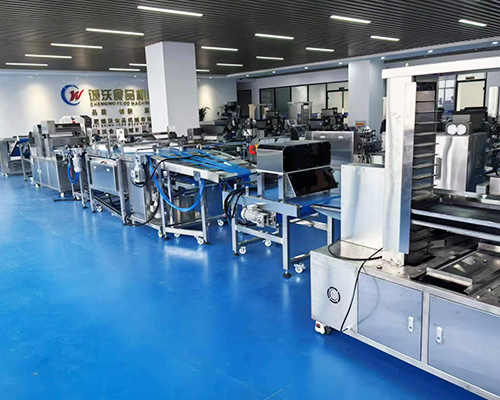

The global food industry is moving away from the era of one size fits all machinery. As consumer tastes diversify and food safety regulations tighten, the demand for highly specialized equipment has surged. For factory owners and procurement managers, the search for a reliable food processing machine manufacturer is no longer just about buying a piece of hardware; it is about finding a strategic partner capable of engineering solutions that fit a specific production logic. This transition from standard utility to custom engineering is what separates market leaders from their competitors.
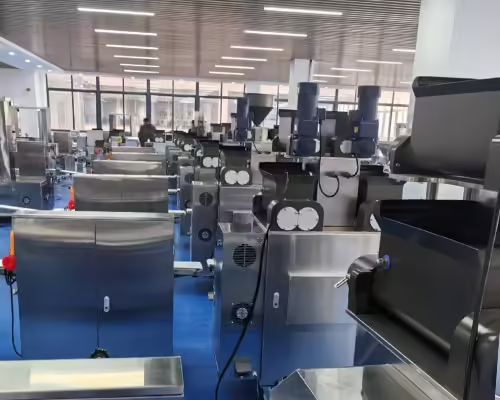
Choosing to work directly with a food processing machine manufacturer, rather than a third party distributor, offers immediate logistical and financial benefits. Direct communication ensures that your technical requirements are not lost in translation. When you speak to the engineering team at the source, you get rapid feedback on the feasibility of your custom designs, which significantly reduces the risk of post-purchase modifications.
Furthermore, a factory direct relationship eliminates the middleman markup. In large scale industrial procurement, these savings can be reinvested into higher grade materials or advanced automation features. More importantly, direct access to the original equipment manufacturer (OEM) means that your spare parts supply chain is shorter and more reliable, which is critical for maintaining 24/7 production cycles.
Every food product has its own physical and chemical personality. A dough for a flaky pastry requires a completely different handling pressure than a dense rye bread or a high hydration pizza base. A professional food processing machine manufacturer understands these rheological properties. Customization allows for the adjustment of extrusion ratios, sheeting speeds, and cutting pressures to protect the delicate structure of your specific recipe.
Beyond mechanical performance, custom tooling allows for the creation of unique shapes and sizes that define your brand. Whether you need a specific diameter for a burger bun or a non-standard thickness for a vegetable slice, a manufacturer with strong research and development (R&D) capabilities can create bespoke molds and blades that give your product a distinct competitive edge on the retail shelf.
One of the biggest challenges in industrial food production is the “bottleneck” effect, where a new machine is faster than the one before it, causing a pile up, or slower than the one after it, causing idle time. A turnkey solution from a comprehensive food processing machine manufacturer eliminates this issue by designing the entire line as a single, synchronized organism.
Modular systems are the key to this integration. By using standardized connection protocols and modular frames, manufacturers ensure that the washing, cutting, mixing, and packaging stages work in perfect harmony. This holistic approach to factory layout minimizes the footprint of the machinery and maximizes the Overall Equipment Effectiveness (OEE).
To help you evaluate the impact of customized engineering on your facility, the following table illustrates the typical performance gains observed when switching from general purpose equipment to a tailored solution.
| Performance Metric | Standard Utility Machinery | Custom Engineered Solution |
| Ingredient Waste Rate | 3.5% to 5.0% | Less than 1.0% |
| Changeover Time (Recipe) | 45 – 60 Minutes | 10 – 15 Minutes (Tool-less) |
| Energy Consumption | Baseline (Non-optimized) | 15% – 20% Reduction |
| Hygiene Compliance | Standard Washdown | Sanitary Design (Zero Dead Zones) |
| Throughput Accuracy | +/- 4% Variance | +/- 0.5% Precision |
In the modern manufacturing landscape, a food processing machine manufacturer must be as proficient in software as they are in stainless steel. The integration of the Internet of Things (IoT) and Programmable Logic Controllers (PLC) has revolutionized how factories operate. Smart sensors now allow for real time monitoring of motor temperature, vibration, and throughput.
For you as an operator, this means moving from reactive maintenance to predictive maintenance. Instead of waiting for a belt to break and stopping production, the system alerts you when a component shows signs of wear. Additionally, remote troubleshooting capabilities allow the manufacturer’s engineers to log in to your system from across the world to adjust timing cycles or update software, ensuring your line is always optimized for the highest possible yield.
Food safety is the most significant risk factor in any processing business. A reputable food processing machine manufacturer prioritizes sanitary design above all else. This involves the exclusive use of certified SUS304 or SUS316 stainless steel, which is resistant to corrosion from acidic foods and harsh cleaning chemicals.
Sanitary design principles go beyond material choice; they involve the elimination of “dead zones” where food particles could accumulate and breed bacteria. Smooth weld points, sloped surfaces for water runoff, and tool-less disassembly for deep cleaning are standard features in high end machinery. According to food safety audit reports from international inspection bodies, facilities using equipment designed with these hygiene principles see a 40 percent reduction in cleaning time and significantly higher pass rates for microbial testing.
If you are a distributor or a large brand owner, the OEM and ODM capabilities of your food processing machine manufacturer are paramount. This process begins with a concept sketch and moves through functional industrial prototyping. A manufacturer with a strong R&D department can take your proprietary idea and turn it into a high speed, durable reality.
This collaborative design process ensures that the machinery is not just a copy of existing technology but a unique asset tailored to your market. For wholesale orders, the ability to customize the user interface, the exterior housing, and the specific mechanical components allows you to offer a differentiated product line that meets the exact needs of your regional customers.
Global trade requires a deep understanding of varied regulatory landscapes. A professional food processing machine manufacturer ensures that every unit is built according to international protocols such as CE for Europe, UL for North America, and ISO standards for quality management. This compliance covers everything from electrical grounding and emergency stop placement to the non-toxicity of lubricants and seals.
Ensuring your equipment is up to code before it leaves the factory floor prevents costly delays at customs and ensures that you can pass local health and safety inspections immediately upon installation. Experienced manufacturers handle the complex documentation required for international shipping, ensuring that the machinery arrives with all the necessary certifications to be legally and safely operated in your facility.
The final hurdle in industrial procurement is the safe delivery and setup of heavy machinery. Professional manufacturers utilize reinforced crating and moisture-proof packaging to protect sensitive electronics during long distance sea freight. However, the service does not end at the port.
On-site commissioning and staff training are the most critical parts of the after-sales process. Having the manufacturer’s engineers present during the initial startup ensures that the sensors are calibrated to your specific local ingredients and power supply. Ongoing technical support and a guaranteed supply of genuine spare parts protect your investment for its entire lifecycle, ensuring that a minor mechanical issue never turns into a major production halt.
Selecting a food processing machine manufacturer is a decision that will define your production efficiency and product quality for the next decade. By focusing on customization, material integrity, and advanced automation, you ensure that your factory remains agile in an increasingly competitive market. Strategic investment in the right machinery is the most direct path to scaling your output while maintaining the high standards that your customers expect.
How do I verify the engineering capability of a food processing machine manufacturer?
A reliable manufacturer should provide a portfolio of successful project cases, detailed technical drawings, and certifications such as ISO 9001. You should also check if they have an in-house R&D team capable of performing material testing and stress simulations to ensure the machinery can handle your specific production volume.
Can a food processing machine manufacturer customize equipment for unique recipes?
Yes, a professional food processing machine manufacturer offers OEM and ODM services. They can adjust mechanical parameters—such as extrusion pressure, cutting speed, and heating temperatures—to match the rheological properties of your specific dough, meat, or vegetable product, ensuring the final texture meets your brand standards.
What material standards should I expect from a high-quality manufacturer?
For global food safety compliance, a reputable food processing machine manufacturer must use food-grade stainless steel, typically SUS304 or SUS316. These materials are non-corrosive, resistant to industrial cleaning chemicals, and designed with smooth welds to eliminate bacterial “dead zones,” which is essential for passing international health audits.
If you’re unsure about which food processing equipment is best for your specific production line or facility layout, our experts are here to help. Contact us today for a personalized consultation, and ensure your food processing system is efficient, compliant, and built for long-term growth. Don’t wait until your current equipment limits your potential—get in touch now to optimize your production and protect your brand!