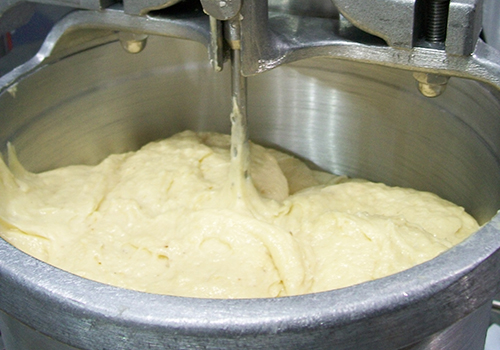

The baking and food processing industry has undergone a massive transformation in recent years. For many facility managers and business owners, the challenge remains the same: how to maintain high product quality while managing the rising costs of manual labor. Traditional hand-kneading or using outdated equipment is no longer sustainable for a scaling business. This is where the integration of an advanced dough kneader machine becomes a strategic investment rather than just a purchase.
A dough kneader machine is a specialized piece of equipment designed to mix flour and other ingredients while kneading the resulting dough through powerful mechanical action. By achieving the ideal uniformity and elasticity required for bread, biscuits, and cakes, these machines serve as the backbone of modern bakery production lines.

One of the most immediate impacts of upgrading to an industrial dough kneader machine is the ability to handle larger volumes in a single cycle. When your production shifts from small, manual batches to high-capacity mixing, the labor required to monitor, load, and unload ingredients drops significantly.
Large-volume bowls, ranging from 50kg to over 200kg, allow for a continuous workflow. Instead of having multiple staff members tending to several small mixers, a single operator can manage a high-capacity spiral mixer. This shortening of mixing cycles ensures that your downstream production—whether it is proofing or shaping—never sits idle waiting for the next batch of dough.
Achieving gluten development through manual kneading is an art form that requires years of experience, but it is also physically exhausting and prone to human error. Advanced dough kneader machines utilize precise speed control to ensure that every batch meets the exact technical requirements of the recipe.
The double-acting motion is a key technological feature in modern units. This involves the synchronized rotation of both the mixing bowl and the dough hook. This mechanical synergy simulates the folding and stretching of human hands but with far greater consistency and force. The result is a dough with perfect elasticity every time, reducing the waste caused by over-mixed or under-developed batches.
The introduction of PLC systems has changed the landscape of the commercial kitchen. Modern industrial mixers now feature digital timers and memory functions that allow you to store specific recipes.
With these pre-programmed settings, the reliance on highly skilled specialized labor is reduced. An entry-level operator can select the “Baguette” or “Pizza” preset, and the machine will automatically adjust the mixing time and speed transitions. This standardization ensures that the quality of your output remains identical across different shifts, regardless of who is operating the machine.
To understand the tangible value of these machines, it is helpful to look at how different configurations impact daily output and labor requirements. The following table illustrates the typical performance metrics for standard industrial models.
| Machine Model Type | Bowl Capacity (Liters) | Flour Capacity (kg) | Mixing Time (Average) | Typical Application |
| Standard Spiral | 60L | 25kg | 8-12 Minutes | Boutique Bakeries |
| Heavy-Duty Spiral | 130L | 50kg | 10-15 Minutes | Wholesale Bakeries |
| Industrial Twin | 250L | 100kg+ | 12-18 Minutes | Food Factories |
| Planetary Mixer | 40L | 15kg (Dough) | 15-20 Minutes | Pastry & Cake Shops |
Reliability is a form of cost-saving. If a machine breaks down during a peak production window, the labor costs for idle workers can be devastating. This is why professional-grade equipment focuses on heavy-duty construction.
The use of SUS304 stainless steel is essential, not just for food safety compliance but for long-term durability against the corrosive nature of salt and yeast. Furthermore, industrial-grade motors equipped with reinforced transmission systems—often using high-strength belts or gears—ensure the machine can handle the high torque required for stiff doughs without overheating or mechanical failure.
Labor costs are not only calculated during the mixing process; they also accumulate during the cleaning and maintenance phase. A machine that is difficult to sanitize can add an hour of labor to every shift.
Modern designs prioritize ergonomics with easy-to-disassemble components and smooth surfaces that prevent dough buildup. Integrated safety guards not only protect your staff from injury—reducing liability and lost time—但 also often feature emergency stop systems that are easy to trigger. Quick-release mechanisms allow for faster sanitation, ensuring your team spends more time producing and less time scrubbing.
In a large-scale food factory, energy consumption is a significant part of the overhead. Advanced dough kneader machines are now engineered with high-torque motors that consume less electricity per kilogram of dough produced.
Additionally, these motors are designed to minimize heat transfer to the dough. According to technical reports from bakery equipment engineering associations, controlling the friction temperature during the mixing stage is vital for yeast stability. By preventing the dough from overheating during the knead, you save on refrigeration costs and ensure the fermentation process remains predictable, further reducing the risk of spoiled product.
The versatility of a professional dough kneader machine allows a business to diversify its product range without investing in entirely new mixing fleets. Whether you are producing hard biscuit dough, which requires high pressure and low moisture, or soft cake batters, a variable-speed kneader can adapt.
For those looking to scale, these machines can be integrated into fully automatic production lines. This transition from standalone equipment to an integrated system represents the ultimate step in labor cost reduction, as the dough can be automatically tilted and fed into dividers and shapers.
When you are looking to purchase, the technical specifications are only half of the story. The value of a manufacturer lies in their ability to provide customization. A reliable partner offers OEM and ODM services to tailor the machine’s dimensions, electrical requirements, and control interfaces to fit your specific factory layout.
Ensure that your supplier adheres to international standards and holds certifications such as CE or ISO. These credentials are proof of quality and safety, ensuring that the equipment you integrate into your business is built to last and safe for your workforce.
Investing in an advanced dough kneader machine is one of the most effective ways to stabilize your production costs and protect your margins. By focusing on automation, durability, and capacity, you allow your business to grow without a proportional increase in labor expenses. The right equipment does not just mix dough; it provides the consistency and reliability that define a successful food production enterprise.
If you are ready to optimize your production line, focusing on these technical advancements will ensure your facility remains competitive in an increasingly demanding global market. Reach out to a technical consultant to discuss which capacity and configuration will best serve your current output goals while leaving room for future expansion.
What is the main difference between a spiral mixer and a planetary dough kneader machine?
A spiral mixer is specifically engineered for heavy dough development, featuring a rotating bowl and a synchronized hook that minimizes friction heat. In contrast, a planetary mixer uses a stationary bowl and a versatile agitator that moves like a planet, making it better suited for lighter batters, creams, and multi-purpose confectionery tasks.
How do I determine the right capacity for an industrial dough kneader machine?
The right capacity depends on your hourly production goals and the hydration level of your dough. For wholesale bakeries, a 50kg to 100kg flour capacity is standard, while boutique shops may opt for 25kg models. Always ensure the motor power is rated for the maximum weight of your stiffest dough to prevent mechanical strain.
Can a commercial dough kneader machine handle low-hydration dough for biscuits?
Yes, high-torque industrial dough kneader machine are designed to handle low-hydration and heavy doughs used for biscuits and crackers. For these applications, it is essential to choose a machine with a reinforced transmission system and a high-power motor to ensure the machine can maintain consistent speed under heavy resistance.
What food safety certifications should a professional dough kneader machine have?
For international trade and professional food production, a dough kneader machine should ideally carry CE certification for electrical safety and adhere to ISO quality management standards. Furthermore, all components in contact with food, such as the bowl and hook, must be constructed from food-grade SUS304 stainless steel.
If you are unsure about which dough kneader machine is best for your bakery, food factory, or production system, our experts are here to help. Contact us today for a personalized consultation to ensure your dough processing is efficient, consistent, and built for high-capacity growth. Don’t let rising labor costs hold your business back—get in touch now to optimize your production line and protect your margins!