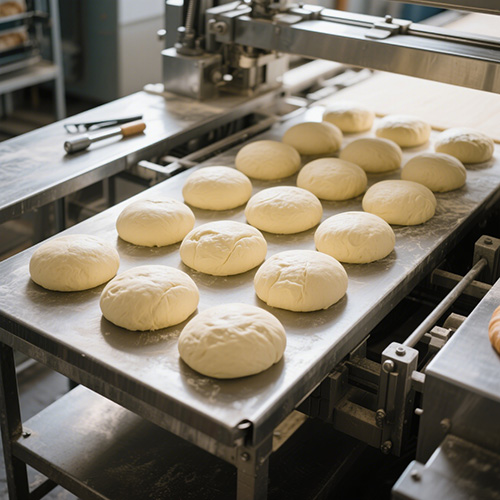

In today’s competitive baking industry, achieving consistency, speed, and quality is no longer optional—it’s essential. As someone running a bakery or industrial food production facility, you understand the importance of reliable equipment. One crucial tool in your production line is the mix flour machine, designed to mix raw ingredients efficiently, creating uniform dough for a wide variety of baked goods. In this guide, we’ll explore how these machines can revolutionize your bakery operations, provide practical tips, and showcase real-world cases to help you make informed decisions.
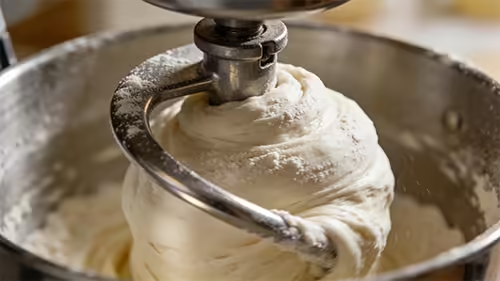
When scaling up production, relying solely on manual or traditional mixers can slow down your operations and introduce inconsistencies. A mix flour machine ensures:
For example, a medium-sized bakery producing 2,000 loaves per day reported a 35% reduction in production time after integrating a high-capacity mix flour machine. According to data from industry reports, automated dough mixing can improve efficiency by 20–40%, depending on batch size and product type.
When evaluating equipment, consider these critical elements:
| Feature | Importance | Example Impact |
|---|---|---|
| Capacity | High for large-scale production | Produces more dough per batch, reduces cycles |
| Mixing Mechanism | Affects texture and elasticity | Spiral mixers enhance gluten development |
| Automation | Reduces manual errors | Consistent dough quality across batches |
| Cleaning | Impacts hygiene and uptime | Easy disassembly prevents cross-contamination |
| Speed Control | Versatility for different recipes | Allows soft and firm dough preparation |
Understanding machine types helps you select the best option for your bakery:
Designed for high hydration doughs like pizza and artisan bread, spiral mixers combine a rotating bowl and spiral hook to knead dough efficiently without overworking it.
Ideal for cake, pastry, and biscuit production, these mixers rotate the beater around a fixed bowl, ensuring thorough incorporation of ingredients, especially when dealing with batters and cream-based doughs.
Suitable for large-scale industrial bakeries, horizontal mixers provide continuous kneading, ideal for bulk production lines and consistent dough quality.
A commercial bakery recently upgraded its production line with a 250 kg mix flour machine to meet growing demand. Before the upgrade:
After installation:
The bakery experienced a 40% increase in production efficiency, reduced waste, and improved product consistency, illustrating the transformative impact of modern flour mixing technology.
Regular maintenance ensures your mix flour machine operates at peak performance:
Proactive maintenance prevents costly breakdowns and ensures consistent dough quality, crucial for customer satisfaction.
To maximize the machine’s potential:
This approach not only saves time but also enhances product quality and reduces labor dependency.
Investing in a mix flour machine may seem significant upfront, but the long-term benefits often outweigh costs. Consider the following comparative analysis:
| Cost Factor | Traditional Mixing | Automated Mix Flour Machine |
|---|---|---|
| Labor Hours per Batch | 3 hours | 1.5 hours |
| Dough Consistency | Moderate | High |
| Production Speed | Medium | Fast |
| Waste Reduction | Low | High |
| Maintenance Downtime | Medium | Low |
As shown, automation reduces labor and improves consistency, yielding a faster ROI.
Can a mix flour machine handle multiple dough types?
Yes, modern machines come with adjustable speed and mixing mechanisms suitable for soft, firm, and enriched doughs.
How do I determine the right capacity for my bakery?
Calculate your average daily production volume and choose a machine with slightly higher capacity to accommodate peak demand.
How often should the machine be serviced?
Routine cleaning is needed after each batch. Professional inspection should occur at least once a year.
Can I integrate it into an existing production line?
Absolutely. Modern mix flour machines can be linked to portioning, proofing, and baking systems for seamless operation.
Does automation significantly reduce labor costs?
Yes. Automated mixing reduces manual intervention, improves consistency, and allows staff to focus on other bakery tasks.