

When it comes to large-scale baking operations, efficiency and consistency are key. A large baking mixer is a kind of equipment specially used for mixing flour and other raw materials and kneading dough. It makes the dough reach the ideal uniformity and elasticity through strong stirring action and is widely used in the production of baked goods such as bread, biscuits, cakes, and more.
Choosing the right mixer is critical for your bakery’s productivity and product quality. In this guide, we will explore the essential features, compare different models, provide a selection guide, and answer common questions to help you make an informed decision.
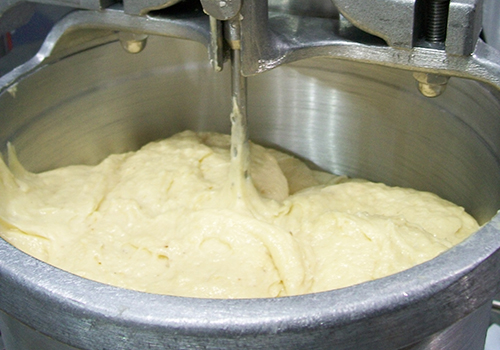
Using a large baking mixer offers several advantages:
According to a recent industry survey on commercial bakeries, bakeries using high-capacity mixers saw a 25% increase in production efficiency while maintaining consistent product quality (source: Baking Industry Report 2023).
The mixer’s capacity should align with your daily production volume. Choosing a mixer too small leads to frequent batches, increasing labor and time costs, while an oversized mixer may be inefficient for smaller operations.
A stronger motor provides consistent mixing, especially for dense dough types like bagels or enriched bread. Energy-efficient motors reduce operational costs without compromising performance.
Multiple speed settings or digital control allow you to fine-tune mixing intensity, which is crucial for different dough types. Consistent speed ensures uniform dough structure.
High-grade stainless steel construction ensures durability, easy cleaning, and compliance with food safety standards. Look for mixers with reinforced mixing arms to handle heavy loads.
| Model | Capacity | Dimension | Voltage | Power | Speed (r/min) |
|---|---|---|---|---|---|
| LJ-25 | 25 kg/80 L | 960 × 650 × 1250 mm | 3-phase, 380V | 5 kW | 120/240 |
| LJ-50 | 50 kg/130 L | 1140 × 720 × 1460 mm | 3-phase, 380V | 7 kW | 120/240 |
| LJ-75 | 75 kg/200 L | 1400 × 750 × 1600 mm | 3-phase, 380V | 10 KW | 130/260 |
| LJ-100 | 100 kg/260 L | 1500 × 900 × 1620 mm | 3-phase, 380V | 11 kW | 130/260 |
| LJ-125 | 125 kg/320 L | 1520 × 940 × 1600 mm | 3-phase, 380V | 13.5 kW | 130/260 |
| LJ-150 | 150 kg/380 L | 1640 × 1080 × 1550 mm | 3-phase, 380V | 15.5 kW | 130/260 |
This table helps you quickly compare models and choose the most suitable large baking mixer for your production scale and product range.
A medium-sized bakery producing 500 kg of dough daily needed a mixer that could handle both bread and cake dough. After evaluating motor power, capacity, and control features, they chose a medium large baking mixer with digital controls and multiple speed settings. The result:
This illustrates how proper selection enhances operational efficiency and product quality.
By following this structured approach, you can select a large baking mixer that meets your bakery’s unique needs.
Choosing the right large baking mixer is crucial for optimizing bakery operations, improving product consistency, and boosting efficiency. By considering capacity, motor power, speed control, and build quality, you can make an informed decision that enhances both production and quality.
For expert guidance and tailored solutions, contact Chengwo Food Machinery today. Our team can help you select the ideal large baking mixer to meet your bakery’s production goals and elevate your baked products’ quality.
What is a large baking mixer used for?
A large baking mixer is used to mix flour and other raw ingredients, knead dough, and ensure uniformity and elasticity for baked goods.
How do I choose the right capacity?
Consider your daily production volume and the type of baked goods you produce. Use the comparison table to identify suitable models.
Can one mixer handle multiple product types?
Yes, mixers with adjustable speed settings and digital controls can handle various dough types, from bread to cakes.
Does motor power affect dough quality?
Absolutely. Higher motor power ensures consistent mixing, especially for dense or enriched doughs.
Are digital controls worth it?
Digital controls improve precision, reduce human error, and allow automation, making them highly beneficial for large-scale operations.
