

At Chengwo Food Machinery, we design advanced food processing equipment that helps bakeries improve efficiency and consistency. One of the most important elements in any commercial bakery is the commercial dough kneader machine. This machine ensures uniform dough texture, enhances production speed, and reduces manual labor.
For bakeries producing bread, pizza, pastries, or specialty baked goods, a reliable dough kneader is indispensable. In this guide, we will explore the key features, benefits, comparisons, maintenance tips, and frequently asked questions about commercial dough kneader machines, helping you make an informed choice for your bakery.
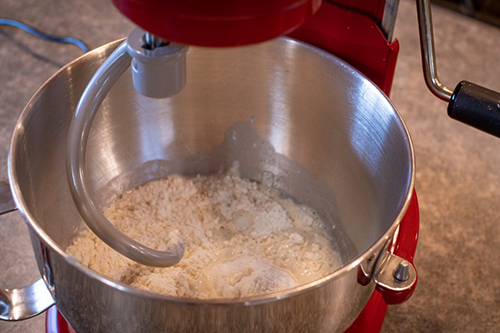
| Model | Capacity | Dimension | Voltage | Power | Speed (r/min) |
|---|---|---|---|---|---|
| LJ-25 | 25kg/80L | 960 × 650 × 1250 mm | 3-phase, 380V | 5KW | 120/240 |
| LJ-50 | 50kg/130L | 1140 × 720 × 1460 mm | 3-phase, 380V | 7KW | 120/240 |
| LJ-75 | 75kg/200L | 1400 × 750 × 1600 mm | 3-phase, 380V | 10KW | 130/260 |
| LJ-100 | 100kg/260L | 1500 × 900 × 1620 mm | 3-phase, 380V | 11KW | 130/260 |
| LJ-125 | 125kg/320L | 1520 × 940 × 1600 mm | 3-phase, 380V | 13.5KW | 130/260 |
| LJ-150 | 150kg/380L | 1640 × 1080 × 1550 mm | 3-phase, 380V | 15.5KW | 130/260 |
A commercial dough kneader machine is a crucial element for any bakery seeking consistent quality, efficiency, and scalable production. By selecting the right type and integrating it into your workflow, you can reduce labor, maintain dough consistency, and improve overall bakery output.
If you’re ready to optimize your bakery production line, explore different commercial dough kneader machines and contact Chengwo Food Machinery for professional advice and tailored solutions. Take the next step toward higher efficiency and superior baked goods today!
How do I choose the right commercial dough kneader machine?
Consider your daily production volume, dough types, and workflow automation needs. Comparing capacities, mixing styles, and features helps you narrow down options.
Can these machines handle sticky or high-gluten dough?
Yes, machines like spiral and double-arm kneaders are designed to efficiently mix tough doughs while maintaining uniform consistency.
How often should I maintain my dough kneader machine?
Routine maintenance after every batch or at least weekly ensures optimal performance. Key checks include cleaning, lubrication, and inspecting moving parts.
Can these machines be integrated into a full bakery production line?
Absolutely. Modern commercial dough kneader machines are designed for workflow integration, connecting seamlessly with mixers, dividers, and proofing cabinets.
Are there differences between types of kneaders for specific doughs?
Yes. Spiral mixers are ideal for high-gluten dough, planetary mixers for pastries, and double-arm mixers for large, heavy dough batches. Choose according to your product needs.
